Short answer
The California Department of Tax and Fee Administration asks for more than one address when you register for a seller's permit, and the fields do different jobs. The business location is the place where you customarily negotiate sales with customers. It is the place the permit is issued for, the place where the permit must be displayed, and, for a seller with one place of business, the place the local share of sales tax is generally assigned to. The mailing address is where CDTFA sends notices, and it is the one you choose. The books-and-records line asks for the person who keeps your records and where. A workshop with no mail delivery stays in the location field, and the mailing field takes the P.O. box or a staffed street address.
Key takeaways
- CDTFA's registration asks for a business location, a mailing address, and the contact details of the person who keeps the books and records. They are three fields with three jobs, not three copies of one address.
- The location field is defined by activity, not by mail. Regulation 1699 requires a permit for each place of business where sales are customarily negotiated with customers, and section 6067 requires the permit to be displayed at the place it was issued for.
- The location field also carries money. Under Regulation 1802, a retailer with one place of business has the California retail sales that place takes part in assigned to that place for the local share of the tax, and a door-to-door seller with no permanent place of business is assigned to the county of the address shown on the permit.
- The mailing address is the one you control. CDTFA treats it as a separate field, labels the mailing line on its own event form as a street number or P.O. box, and tells permit holders to keep it current through their online account.
- We did not find a sentence in CDTFA's seller's permit FAQ, the January 2026 Publication 73, or the registration checklist that bars a P.O. box from any field. The claim that California forbids one appears on a vendor page we read, and the CDTFA pages it links to do not say so. The definition of the location field does that work instead.
Who this is for
- California sellers registering for a seller's permit whose studio, workshop, or farm stand does not receive mail.
- Online and event sellers who were asked for a books-and-records address and a mailing address in the CDTFA registration and are not sure which is which.
- Founders comparing a home, a P.O. box, and a mail-only business address for each field before they file.
The registration goes smoothly until the address screen. A studio with no mail delivery, a P.O. box for paper, and the California Department of Tax and Fee Administration asking for a business location, a mailing address, and who keeps the books. Three boxes seemingly wanting one answer three times.
They do not. Each field is tied to a different rule, and once the rules are in view the right entry for each box is usually obvious. This guide walks through the three fields, what CDTFA does with each one, and where a P.O. box or a mail-only street address belongs. It covers the state seller's permit only. City business licenses ask their own address questions under their own rules, and a forum post that comes up for this search turns out to be about a city license in Orange County, not the state permit.
Three fields do three jobs
CDTFA's registration page lists what to have ready before you start, and the list includes the contact information of the person or persons who maintain the books and records: name, address, and phone number. Publication 73, the department's own guide to the seller's permit, carries the same line in its list of what an applicant provides. The department's FAQ on obtaining a permit calls the location field the business address, and it treats that address and the mailing address as two things a permit holder might change separately. Its notice of business change form uses the same two names, business address and mailing address. This guide says location for the first one, because the rules that govern the field are about where business happens. Put together, that is the structure the registration screen appears to follow.
| Field | What CDTFA uses it for | What decides the entry |
|---|---|---|
| Business location | The place each permit is tied to. It sets where the permit must be displayed, whether you are engaged in business inside a district for district tax, and, for a seller with one place of business, where the local share of sales tax is assigned. | Where you customarily negotiate sales with customers. Regulation 1699 and sections 6066 and 6067 of the Revenue and Taxation Code. |
| Mailing address | Where notices and correspondence are sent, and where a refund of any security deposit would go. | Wherever you reliably receive mail. It is a separate field, and you can change it through your online account. |
| Books and records | The person and place CDTFA can turn to when it audits, which Publication 73 says it may do in three-year intervals, at closeout, or alongside an audit of another permit you hold. | Whoever keeps the records, at the address where they are kept. Often the owner, sometimes the accountant. |
Fields as described in CDTFA's registration checklist, the January 2026 edition of Publication 73, and the department's seller's permit FAQ, with the location test taken from Regulation 1699 and sections 6066 and 6067, and the local share rule from Regulation 1802.
The rest of this guide takes the fields one at a time, starting with the one that carries the most consequences.
Ready to set up your business address?
See which US cities fit — about a minute, no card needed.
The location field is about where sales happen, not where mail arrives
Section 6066 of the Revenue and Taxation Code requires anyone who wants to do business as a seller in California to file an application for a permit for each place of business. Section 6067 has the department issue a separate permit for each place, and it adds a sentence that matters for a studio or a stall: the permit “shall at all times be conspicuously displayed at the place for which issued.”
What counts as a place of business comes from Regulation 1699. A seller is required to hold a permit “for each place of business in this state at which transactions relating to sales are customarily negotiated with their customers.” The regulation then carves storage out: no additional permit is required for warehouses or other places where merchandise is merely stored and which customers do not customarily visit to make purchases, as long as they are maintained alongside a place that holds a permit.
Read those two sentences against the rural studio and the field stops being confusing. The studio is where the work is made, priced, and sold, whether a sale closes in person or through a website run from the same room. Nothing in the definition asks whether a letter carrier can reach the door. A P.O. box, by contrast, is a place where nothing is negotiated with anyone, which is why it does not fit the field. The reason is the definition, not a form that says so. CDTFA's own guide for online retailers goes a step further: the location of a third party is generally not a place of business of the retailer, even if the third party is a related entity. We read a mail-only address run by someone else as sitting on that side of the line.
What we could and could not find
One vendor page we read for this question states flatly that California does not allow a P.O. box on a seller's permit, and the two CDTFA pages it links to, the homepage and the seller's permit FAQ, do not say it. Nor does the January 2026 edition of Publication 73 or the registration checklist, which we read looking for that sentence. Every P.O. box mentioned in Publication 73 is the department's own, and neither the seller's permit FAQ nor the registration checklist mentions one. An older paper version of the application, form BOE-400-SPA, did say it outright in its business address item: do not list a P.O. box or mailing service. We found that form only on third-party mirrors, not on CDTFA's site, so we treat it as history rather than the current rule. In the documents we could read, what is current is the definition above, and the definition, not a ban, is what keeps a box out of the location field. We could not open the online registration screens themselves.
One more line in the regulation matters to anyone who sells online from California. It also requires a permit for a location where merchandise is stored when the retailer negotiates sales out of state and fills them from stock in this state. Either way the studio holds the permit: as the place where sales are negotiated, or, for a retailer that negotiates sales out of state, as the California location the orders ship from. Marketplace sales are the exception. CDTFA's guide for online retailers says a marketplace seller is not required to register for a seller's permit if all of its sales in or for use in the state are marketplace sales, and that for those sales, where the marketplace facilitator is the retailer, a location of the marketplace seller is not a place of business of the retailer. The studio holds the permit for the sales it makes outside a marketplace.
What the location field decides after you file
The location entry keeps working after the permit arrives, in three ways.
- Display. Section 6067's display requirement attaches to the place the permit was issued for. If the location is the studio, the permit hangs in the studio.
- District tax. Publication 73 explains that a seller must report district tax when it has a business location or is engaged in business within a district, and that a retailer is engaged in business in a district when it maintains an office, sales room, warehouse, or other place of business there, even temporarily. The location field is the first thing that puts you inside or outside a district's boundary.
- Where the local share of the tax goes. Regulation 1802 sets the place of sale for the Bradley-Burns local sales and use tax, the portion that goes to cities and counties. For a retailer with only one place of business in the state, all California retail sales in which that place participates occur there, unless the goods are delivered to an out-of-state destination. CDTFA's local tax guide states the same rule in plain terms and adds the split: of the local rate, the one percent portion goes to the city or county where the sale or use occurs, and the quarter percent portion always goes to the county where the sale or use occurs. A seller with no permanent place of business who sells door to door is assigned to the county of the permanent address shown on the seller's permit.
That last rule is the clearest example of an address field carrying money. For the door-to-door seller, the county written on the permit is the county that receives the local share. For the studio, the studio's own city or county does, and for an unincorporated parcel that means the county. The regulation assigns the local share by which place of business participated in the sale, not by where the mail goes, so an address chosen for mail convenience is not the address this rule looks at.
The mailing address is the one you choose
Publication 73 asks its own question, “Should I tell CDTFA if I change my business, mailing, or email address?” It answers yes and points permit holders to their online account as the free way to update it. The seller's permit FAQ draws the same line: if your business address or mailing address changes, complete a notice of business change or contact the customer service center. Two fields, changed separately.
The department also shows what it expects a mailing address to do. Its certification form for swap meets, flea markets, and special events, CDTFA-410-D, labels the vendor's mailing line “street number or P.O. box, city, state ZIP Code,” and its instructions say that if you obtain a temporary seller's permit, the business address on that permit should be the address of the temporary selling location and the mailing address should be your permanent place of business or residence. Two fields, two jobs, on the department's own form. Publication 73 adds the reason the second one has to stay current: in its section on closing out a business it asks sellers to keep the mailing address up to date because that is where a refund of any security deposit would be sent, and the address it gives for written notices is a P.O. box in Sacramento. That is the department's own address rather than a rule about yours, but it shows what the field is for: receiving paper reliably.
For the rural studio this is the whole answer for the second field. The P.O. box the post office already provides goes in the mailing line, and if the property is not eligible for carrier delivery, the Postal Service provides that box for no fee under the Domestic Mail Manual Group E rules, applied for at the post office rather than through the online tools. The documents we read do not restrict this line by address type, and they are silent on a mail-only business address. A staffed street address is the other candidate for a seller who would rather have someone sign for certified mail or scan what arrives. If that address is a mail-only one in a California city, treat the silence the way our Wyoming guide does: as a question for the department rather than a yes. What that address cannot do in any case is stand in for the studio in the location field, because no sales are negotiated there.
The books-and-records line names a person and a place
The third field trips people up because the Secretary of State's LLC paperwork also asks for an office address, and it is easy to assume the two questions are one. That is a different agency and a different form. Our guide to what becomes public when you use a home address for an LLC covers what the Secretary of State publishes.
CDTFA's field is narrower. The registration checklist asks for the contact information of the person or persons who maintain the books and records: name, address, and phone number. The department's notice of business change form, CDTFA-345, keeps that entry as its own address type, labeled Books and Records Address, alongside the business address and the mailing address, which matches the separate line in the registration checklist. The field is asking who to call and where the ledgers are when the department audits, which Publication 73 says it may do in three-year intervals, at the time you close out your permit, or in connection with an audit on another permit you hold. The publication also sets the baseline for what must be kept: sales and use tax records for at least four years, unless the department gives written authorization to destroy them sooner.
So the entry is whoever keeps the records, at the address where they sit. For a studio owner who does the bookkeeping, that is the studio. For a seller whose accountant holds the files, it is the accountant's office. It is not a place for the mailing address, and a mail-only address does not help here, because a mail-only address holds no ledgers.
Which of the three is public
Publication 73 addresses privacy directly. Records are generally covered by state laws that protect privacy, but under certain circumstances the department may release to the public the information printed on the seller's permit, the account start and closeout dates, and the names of business owners or partners. The statute behind that sentence is section 7056 of the Revenue and Taxation Code, which makes it unlawful for the department to disclose a retailer's business affairs, excepting the information set forth on permits issued under the seller's permit article. Section 6067 says a permit is valid only for the person in whose name it is issued and for the transaction of business at the place designated in it, and it requires the permit to be displayed there. Of the three fields, the location is the one written into the permit itself, and the permit is the document the public may see.
The department also runs a verification page for seller's permits, which Publication 73 describes as a way to check that a seller's permit number included on a resale certificate is valid. A resale certificate you hand a supplier carries that number, and the publication points suppliers to the website or the customer service center to verify the permit. Which fields the verification page displays is something we describe only as far as the department's own documents do: the online services overview says the system helps you determine the status of a permit, license, or account, and notes that not every permit can be disclosed.
In the documents we read, nothing describes the mailing address or the books-and-records contact as part of the permit: neither is the place the permit is issued for, the place it designates, or the place it is displayed at. That is the practical privacy split as far as those documents describe it. The location is the field with a public life, and the other two are administrative.
How California compares with Wyoming
It helps to set this next to a state that took the opposite approach. Wyoming's sales and use tax license application says in bold that the location address cannot be a registered agent or virtual office address, a sentence we traced to the form itself in our Wyoming guide. We did not find a comparable instruction in the CDTFA documents we read. California defines the field by what happens there and lets the definition exclude whatever does not fit.
The practical difference is in the test rather than in the usual result. Under Regulation 1699, a seller who negotiates sales from a shared office has a place of business there, because the definition looks at the activity. Wyoming's instruction does not turn on that question. It starts from address type, excluding registered agent and virtual office addresses by name, so the same office would be judged first by what it is called. A seller who wants a city address purely for mail is in the same position in both states: the location field is closed to that address. What the mailing field will take depends on each state's own documents, and our Wyoming guide treats that form's silence on the point as a question for the Department rather than a yes.
Where that leaves the rural studio
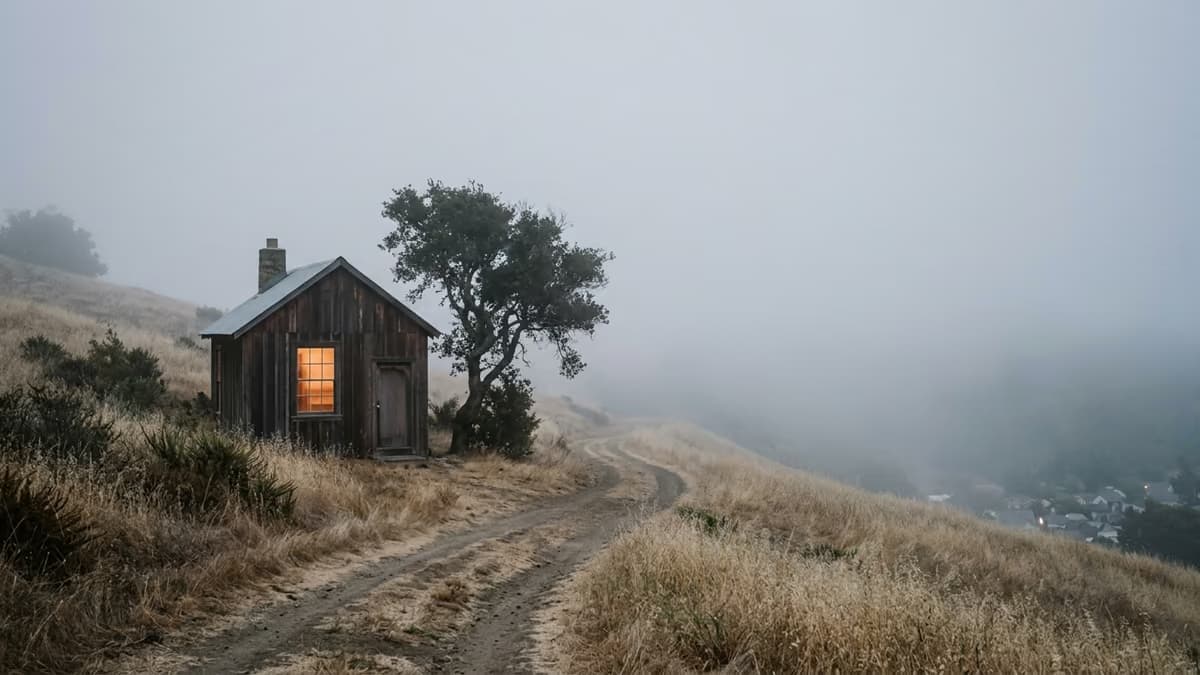
- 1Business location: the studio, at the address the county lists for the parcel. Mail delivery is not part of the test, and the permit will hang there.
- 2Mailing address: the P.O. box, or a staffed street address if you want someone to sign for certified mail and scan what arrives. Update it through the online account whenever it changes.
- 3Books and records: your own name and the studio if you keep the books, or your accountant's name and office if they do.
If you also sell from a regular booth, that is another place where sales are customarily negotiated, and it has to be on a permit too. Publication 73 says that you may obtain a separate permit for each location, that a consolidated permit for multiple locations is generally possible, and that you should provide every location up front so the right type of permit is issued. A warehouse that customers do not visit, and that only stores goods alongside a permitted location, does not need its own, unless retail sales negotiated out of state are filled from it.
None of this requires a new address. It requires putting the addresses you already have into the fields whose rules they satisfy.
If the mailing line is the one you want to upgrade, a save office business address in San Francisco receives mail on your behalf and can forward or scan it, which is the job that field exists for. Whether CDTFA will take a mail-only address on that line is the question we flag above, to be confirmed with the department rather than assumed. We do not offer it as a business location for a seller's permit. That field belongs to the place where you negotiate sales, and for most readers of this guide that place is the studio.
Frequently Asked Questions
Sources & References
Primary sources this guide is based on.
- 1California Department of Tax and Fee Administration · Publication 73, Your California Seller's Permit (January 2026) (accessed September 13, 2026)
- 2California Department of Tax and Fee Administration · Obtaining a Seller's Permit, frequently asked questions (accessed September 13, 2026)
- 3California Department of Tax and Fee Administration · Local and District Tax Guide for Retailers, Local Tax (accessed September 13, 2026)
- 4California Department of Tax and Fee Administration · Local and District Tax Guide for Retailers, Online Retailers: Registration and Local Tax (accessed September 13, 2026)
- 5California Department of Tax and Fee Administration · Form CDTFA-410-D, Swap Meets, Flea Markets, or Special Events Certification to Operator (Rev. 9, March 2023) (accessed September 13, 2026)
- 6United States Postal Service · Domestic Mail Manual 508, Recipient Services, section 4.5.2, Fee Group E free post office box service (accessed September 13, 2026)
- 7California Department of Tax and Fee Administration · Online Services, Registration, Information Needed to Register for a Permit, License, or Account (accessed September 13, 2026)
- 8California Department of Tax and Fee Administration · Regulation 1699, Permits (accessed September 13, 2026)
- 9California Department of Tax and Fee Administration · Regulation 1802, Place of Sale and Use for Purposes of Bradley-Burns Uniform Local Sales and Use Taxes (accessed September 13, 2026)
- 10California Legislative Information · Revenue and Taxation Code section 6066, application for a permit for each place of business (accessed September 13, 2026)
- 11California Legislative Information · Revenue and Taxation Code section 6067, separate permit for each place of business and display (accessed September 13, 2026)
Not sure what you need?
Two short pages sort it out — what the products actually are, and which situation you're in.

save office
Published
I'm Henry, a hedgehog in a bow tie who explains the dull, scary parts of building and running a U.S. business.