Key takeaways
- Schedule C asks for a business address on Line E, and it is the address tied to the sole proprietor or single-member LLC filing the form.
- The IRS instructions say to show a street address instead of a box number on Line E and to include any suite or room number, so a PO Box is not what that line is built for.
- The address you settle on tends to follow you onto W-9s and invoices clients see, so a real business address keeps your home off the paperwork around your return.
Before you start
- Have the exact business address you plan to use, including any suite or unit number.
- Check whether you are filing Schedule C as a sole proprietor or as a single-member LLC, since both use the same form.
Who this is for
- Sole proprietors and single-member LLC owners filling out Schedule C.
- Freelancers who do not want a home address on their business paperwork.
- Anyone lining up one consistent address across their tax forms.
Schedule C asks for a business address on Line E, and the line trips people up because the IRS has a few specific rules about what belongs there. Choosing the right address keeps your filing clean and keeps your home address off the paperwork that travels with it.
This guide covers where Schedule C asks for an address, what the IRS wants on Line E, whether a home or PO Box address works, and how to keep the address consistent across your tax forms.
Setting up your LLC? See your US address options — no card →
Where Schedule C Asks for an Address
Schedule C is the form sole proprietors and single-member LLCs use to report business income on a personal return. Near the top, Line E asks for the business address, and it is the address tied to that business rather than a separate filing.
Because a single-member LLC is usually treated as a disregarded entity for federal taxes, its owner reports the business on Schedule C, and the same Line E address question applies. The form does not change just because there is an LLC behind it.
What the IRS Wants on Line E
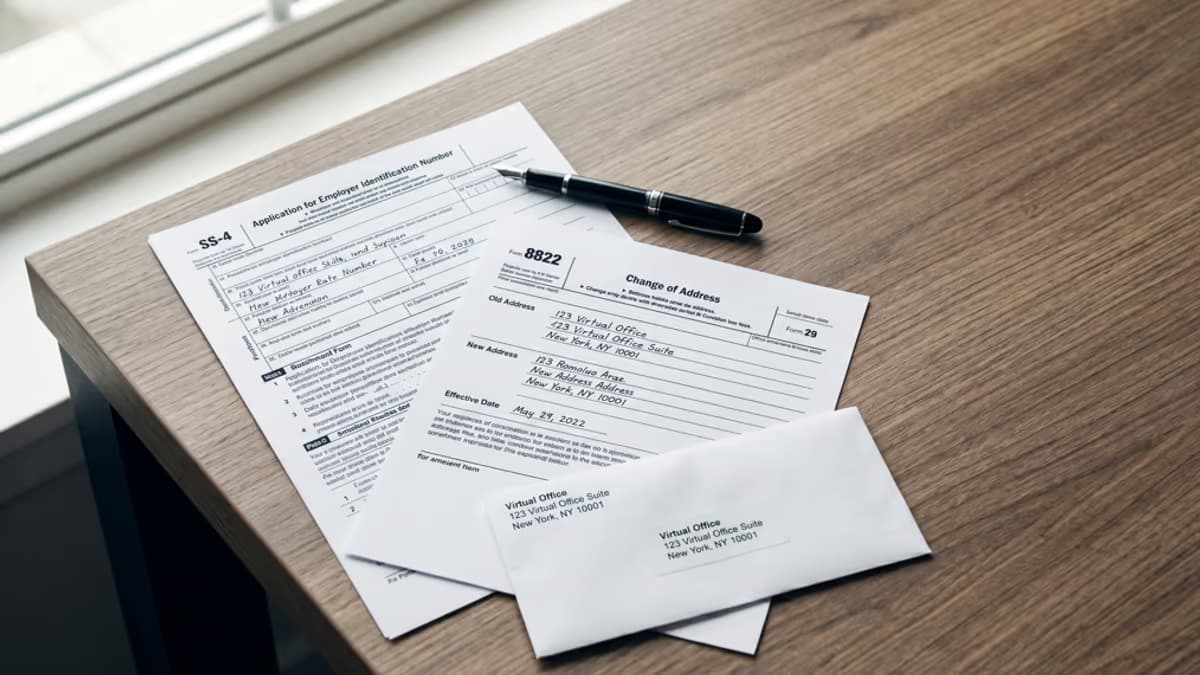
The IRS instructions for Schedule C are specific about Line E. They say to show a street address instead of a box number, and to include the suite or room number if there is one.
- Use a street address rather than a box number, which is why a PO Box is not what Line E is built for.
- Include the suite or unit number, since a missing one is a common reason an address looks incomplete.
- The instructions note that if you ran the business from the home address already shown on your Form 1040, you do not need to complete this line.
Ready to set up your business address?
See which US cities fit — about a minute, no card needed.
Home Address or Business Address?
This is the real question behind Line E. A home address is allowed, and the instructions even let you skip the line when the business runs from the home address on your 1040. The catch is what that address does once it is in your records.
The address you settle on for your business tends to show up again on a W-9 you give clients, on invoices, and on other forms, and those are seen by people outside the IRS. A real business address keeps your home off that client-facing paperwork while still meeting the Line E rules.
Check the Address First
Since Line E wants a real street address with the right suite, it is worth confirming the address is deliverable and correctly formatted before you use it. That avoids an address that looks incomplete or cannot receive mail.
You can confirm how an address is classified and whether it is deliverable with our free Address Checker before you put it on your return.
Keep It Consistent Across Your Forms
Your Schedule C address is one of several places your business address appears, and they work best lined up. An address that differs across forms is what creates mismatches down the line.
- Match your Schedule C address with the one on your W-9 and the EIN records for your business.
- We cover the W-9 and 1099 side in our guide for freelancers and the self-employed.
- If you are weighing whether the IRS accepts a non-home address at all, our guide on whether the IRS accepts a virtual address walks through it.
A Real Business Address for Your Filings
A real business address that meets the street-address rule gives you one address to use on Schedule C, your W-9, and the rest of your forms, without putting your home on them. It keeps your filing clean and your home private at the same time.
You can set up a real US business address in one of several cities through save office onboarding, usually within a day, and use it across your return and your other business forms.
Line E wants a real street address with the suite number, lets you skip it when the business runs from your home, and is not built for a PO Box. The bigger question is whether you want your home address on the paperwork that follows your return.
Pick a real business address, confirm it is deliverable, and keep it consistent across your Schedule C, W-9, and EIN records, and the address stops being something you have to think about each filing season.
Frequently Asked Questions
Not sure what you need?
Two short pages sort it out — what the products actually are, and which situation you're in.