Key takeaways
- The IRS does not maintain a separate 'virtual address' rule; it requires a deliverable US street address that USPS can route mail to.
- Form 8822-B updates the IRS address of record; the 60-day filing rule applies to entity address changes.
- The address on Form SS-4 (EIN), Form 8822-B, and the annual return must match for IRS correspondence to land in one place.
Who this is for
- Founders unsure whether their virtual office address passes IRS verification.
- Operators changing the LLC's mailing address and coordinating with the IRS.
Yes, the IRS accepts a virtual address for business as long as it is a real US street address that can receive mail. The form determines the rest. Form SS-4 accepts a virtual mailing address (line 4a) — including a P.O. Box per the form's printed label — but line 5a (street address) requires a physical street address. Form 8822-B is how an existing LLC switches its IRS address of record from a home address to a virtual one. The practical risk with a P.O. Box is not the IRS itself but downstream KYC at banks and payment processors. Here is the form-by-form picture.
Setting up your LLC? See your US address options — no card →
IRS Form-by-Form Acceptance
The IRS treats addresses differently depending on what the form is for. The pattern is consistent. If the form is meant to receive a tax notice or a confirmation letter, a virtual street address is usually fine. If the form is asking where the business physically operates, the IRS may want a separate physical location. The table below covers the forms most small businesses encounter in the first two years.
| Form | Purpose | Virtual address accepted | What to know |
|---|---|---|---|
| Form SS-4 | Apply for an Employer Identification Number (EIN) | Yes, on line 4a | Line 4a is the mailing address where the IRS sends the CP 575 confirmation letter. The form's printed label specifies 'Mailing address (room, apt., suite no. and street, or P.O. box)' — P.O. Boxes are technically accepted at line 4a, but a real US street address is preferred to keep downstream KYC at banks and payment processors clean. Line 5a (street address) does not accept P.O. Boxes. |
| Form 1040 / 1040-NR | Personal income tax filing | Yes, on the address line | The IRS uses this address for refund mailings and notices. Update mid-year changes with Form 8822. |
| Form 1120 | C corporation income tax return | Yes, as the principal address | The principal business address can be the virtual office. The IRS rarely separates legal and operational addresses on this form. |
| Form 1120-S | S corporation income tax return | Yes | Same rule as Form 1120. The address shown on the return is where the IRS will mail any notice. |
| Form 1065 | Partnership return | Yes | The partnership's principal place of business can be the virtual address as long as the entity actually receives mail there. |
| Form 5472 | Foreign-owned single-member LLC reporting | Yes, on the principal business address line | Required annually. A missed filing can trigger a $25,000 penalty per form, so the address has to be one that reliably forwards IRS mail. |
| Form 8822 / 8822-B | Change of address | Yes, this is the form for switching | File within 60 days of any business address change. 8822 is for individuals, 8822-B for entities tied to an EIN. |
| Form 8832 | Entity classification election | Yes | The business address listed here is matched against the SS-4 record. A mismatch can delay the election. |
How the IRS treats a virtual address on common business forms.
The IRS does not have a separate virtual address category
Internally, the IRS treats every address the same. What flags problems internally is the mail-return process. If a notice gets sent and comes back undeliverable, the address gets marked. A virtual office that scans and forwards mail reliably is unlikely to trigger that flag. A P.O. Box, a vacant property, or a mail service with no USPS authorization paperwork on file can.
Why USPS Classification Still Affects IRS Mail
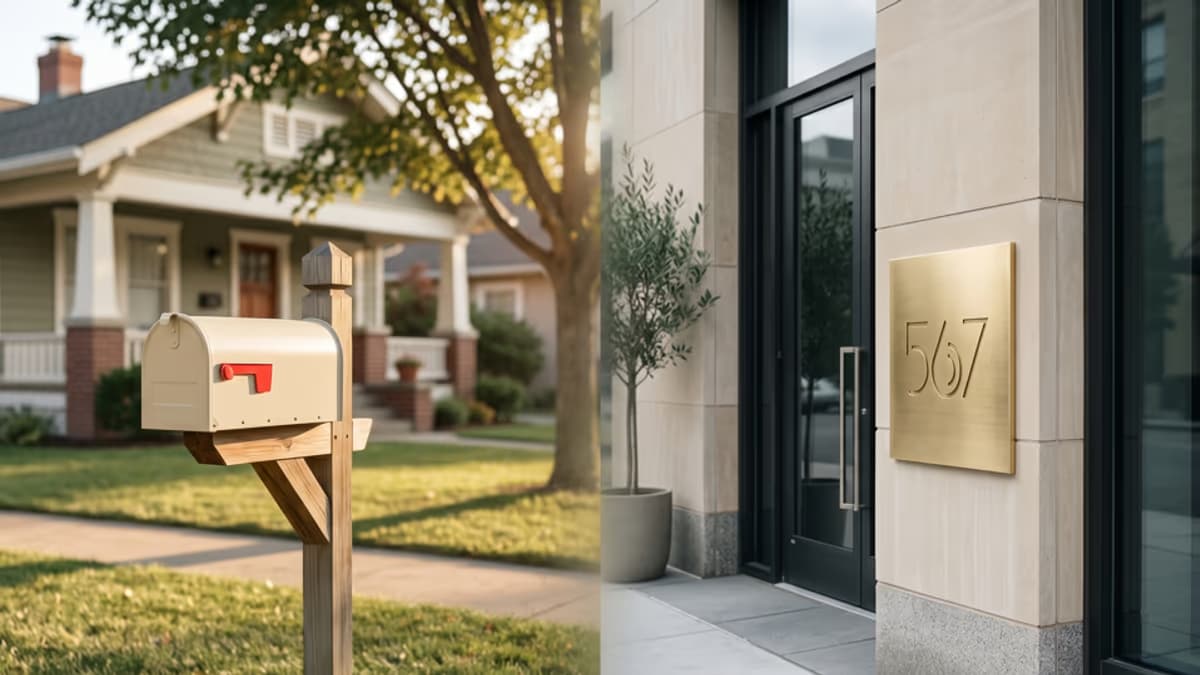
The IRS does not check whether an address is classified as a Commercial Mail Receiving Agency (CMRA) by USPS. USPS does. CMRA is a USPS classification for any private business that receives mail on behalf of others, and it is the same flag that bank compliance software reads during account onboarding.
The connection to the IRS is indirect but real. If the address is CMRA-flagged and there is no USPS Form 1583, the standard authorization paperwork required for third-party mail receipt, signed and stored with the mail service, USPS can refuse delivery. The IRS does not know this happened. It only knows the notice it sent came back. The result is the same as a bad address.
- Verify whether the address is CMRA-flagged before using it on Form SS-4 or Form 8822, then ask the provider to confirm the Form 1583 authorization is signed and stored.
- Keep a copy of the signed Form 1583 with the formation documents. Banks, payment processors, and occasionally the IRS during audit may ask for it.
- If the address is CMRA-flagged, also confirm the provider's mail forwarding policy. The IRS sends the CP 575 confirmation letter only once; a replacement EIN verification (Letter 147C) is a separate request that typically takes several weeks.
The four-bucket framework, where CMRA status combines with the Residential Delivery Indicator (RDI) to produce four distinct address types, is covered in the save office guide on CMRA flags. That guide also explains what changed in January 2026 when USPS retired its free address lookup API.
Ready to set up your business address?
See which US cities fit — about a minute, no card needed.
Using a Virtual Address for an EIN (Form SS-4)
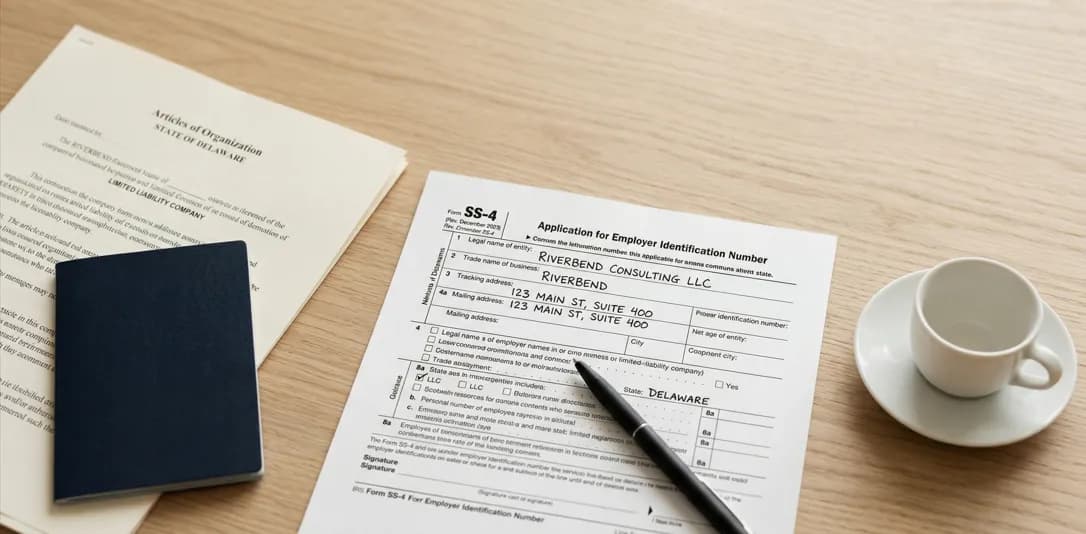
Form SS-4 is where most founders first put a virtual address on an IRS document. Line 4a, the mailing address, is the field that matters. The IRS uses this address to send the CP 575 letter, which is the official EIN confirmation that banks, Stripe, and tax preparers will ask for later.
| Line | Field | What to enter |
|---|---|---|
| 4a | Mailing address | Yes. The CP 575 letter ships here. A virtual address with reliable mail scanning is preferred. Line 4a (mailing address) accepts P.O. Boxes per the form's printed label, but line 5a (street address) does not. |
| 4b | City, state, ZIP | Match the city, state, and ZIP of the address on line 4a exactly. |
| 5a | Street address (if different) | Optional. Most LLCs leave this blank or repeat line 4a. Only fill it if operations physically happen elsewhere. |
| 7a | Responsible party name | Personal name. Not an address field. |
| 7b | Responsible party SSN, ITIN, or EIN | Personal tax ID. Foreign founders without an SSN write the word Foreign. |
Form SS-4 address fields and what they mean.
Foreign founder paper path
If the responsible party has no SSN or ITIN, the online tool will reject the application. The fax channel is the standard route, and the save office guide for foreign founders walks through Form SS-4 line by line, the international fax number, and the realistic 4 to 6 week timeline.
Form 8822: Updating an IRS Address From Home to Virtual
Many founders start with a home address on the EIN application because they have not formed the business yet, or because the virtual office was not set up in time. The IRS records that home address until a Form 8822 update is filed. Until then, every IRS notice goes to the home, including audit letters, balance-due notices, and refund correspondence.
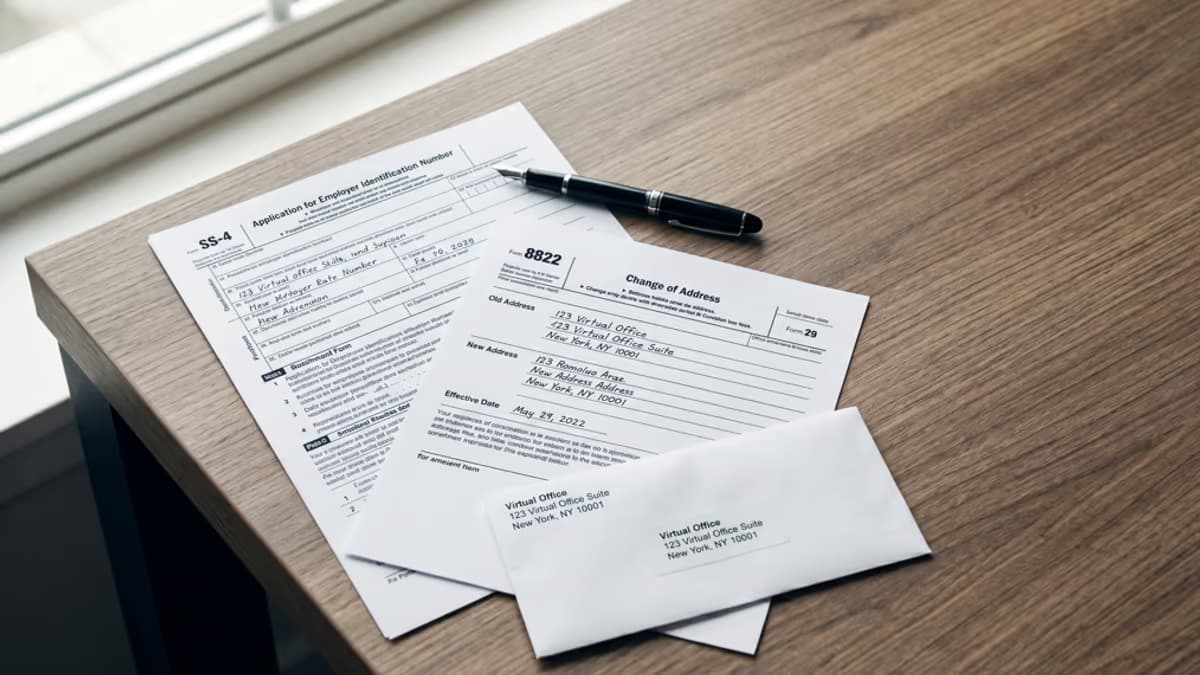
Form 8822 is the channel for updating an individual address. Form 8822-B is the business version, used to update an EIN-linked entity. Most LLCs end up filing both, since the responsible party is the personal contact and the LLC is the business contact.
- 1Download the latest Form 8822 (individual) or Form 8822-B (business) directly from irs.gov. The form is one page and free.
- 2On Form 8822, check the box for which tax forms the change applies to. For a small business owner, that is usually Form 1040 plus any business returns.
- 3Enter the previous address (home, in this case) and the new address (the virtual office). The new address has to be a real US street address, not a P.O. Box.
- 4Sign and date the form. Both spouses sign if filing jointly.
- 5Mail the form to the IRS service center listed in the Form 8822 instructions. The center depends on the previous address state, not the new one.
- 6Allow 4 to 6 weeks for the IRS to update the record. Notices sent during this window may still go to the old address, so leave forwarding in place at the home address for at least 60 days.
Form 8822-B has a 60-day rule
Federal regulations require Form 8822-B to be filed within 60 days of a business address or responsible party change. Late filing does not trigger an automatic penalty, but the IRS can hold the entity responsible for any notice that goes undelivered to the old address. The penalty typically gets enforced when something downstream, such as a missed Form 5472, lands the entity in audit.
Where Virtual Addresses Fail With the IRS
A virtual address is accepted for almost every IRS form, but a few patterns reliably cause rejection or delay. Knowing them in advance prevents the most common stalls.
| Pattern | What goes wrong | Fix |
|---|---|---|
| P.O. Box on Form SS-4 line 4a | The IRS rejects or routes the application to manual review when line 5a is a P.O. Box (line 4a, the mailing address, accepts P.O. Boxes per the form's printed label). | Use a real US street address. If the only available option is a mailbox-style service, sign Form 1583 with the underlying provider first. |
| Vacant or undeliverable street | USPS returns the IRS notice. The address gets flagged in the IRS system. | Verify the address can receive mail before filing. Run it through the save office address checker for USPS-certified delivery status. |
| CMRA-flagged with no Form 1583 | USPS refuses delivery. The IRS sees an undeliverable notice and flags the record. | Sign Form 1583 with the mail service before using the address on any IRS form. |
| Mismatch between SS-4 line 4a and state filing | Banks and the IRS occasionally cross-check. A mismatch can delay EIN-linked applications. | Use the same virtual address across the LLC formation, the EIN application, and the bank account from day one. |
| Residential RDI on a corporate filing | Some IRS letters route differently based on residential vs commercial classification, especially for corporate audits. | If the entity is a corporation, prefer an address that USPS does not flag as residential. |
Address patterns that cause IRS friction.
Verify the Address Before Filing
The IRS does not run a pre-check on the address before accepting a form. Verification happens by mail return weeks later. By that point, the EIN may already be issued to the wrong place, or the Form 8822 may sit unprocessed because the new address came back undeliverable.
Two checks done in 60 seconds prevent most of these. First, run the candidate address through a USPS-certified verification tool to confirm deliverability and CMRA status. Second, ask the virtual office provider for written confirmation that mail reaches the address and that any required USPS authorization paperwork is on file.
- Address is a real US street, not a P.O. Box, before going on Form SS-4 or Form 8822.
- USPS classifies the address as deliverable, verified through a USPS-certified lookup such as the save office address checker.
- If the address is CMRA-flagged, a signed Form 1583 is stored with the mail service provider.
- The same address is used on the LLC formation, the EIN application, and the bank account, so cross-checks always match.
- Mail forwarding or scanning is set up, since the IRS sends time-sensitive notices that have to be read within days, not weeks.
save office provides real US street addresses in cities including New York, Washington DC, San Francisco, Wilmington (Delaware), Cheyenne (Wyoming), and Tampa — accepted for LLC filings, IRS forms, and bank onboarding, with mail scanning that reaches the inbox within hours of arrival.
Frequently Asked Questions
Not sure what you need?
Two short pages sort it out — what the products actually are, and which situation you're in.