Key takeaways
- The address on Form W-9 must be deliverable; freelancers using a virtual mailing address typically pass without issue, but P.O. boxes can trigger client review.
- The mid-year address change problem: if a freelancer moves between projects, the 1099-NEC arriving in January may go to the old address.
- Multi-client privacy benefit: a virtual address keeps the freelancer's home address off every client's accounting system.
Who this is for
- Self-employed freelancers and consultants filling out W-9 forms for clients.
- Solo operators receiving 1099-NEC forms from multiple US clients.
A client adds a freelancer to their payment system and asks for a Form W-9. The W-9 has six fields, one of which is 'Address (number, street, and apt. or suite no.).' The freelancer fills it in, sends it back, and the W-9 lands in the client's compliance file. Five clients later, the freelancer's home address sits in five different compliance files, eventually shows up on five different 1099-NEC mailings every January, and forms part of every client's vendor master record indefinitely.
The W-9 address has a role beyond client paperwork. The IRS uses the address on the W-9 to issue the 1099-NEC mailing in January, the 1099 form gets cross-referenced against the address on the freelancer's most recent Form 1040, and any IRS notice or matching-program letter goes to the same address. A freelancer's home address ends up on more federal records than most LLC owners realize.
This guide covers what the IRS rule on the W-9 address field actually says, how the 1099-NEC mailing flow works in January, the difference between a sole proprietor's address line and an LLC's, and the address options that give a freelancer a real commercial address without losing the client trust that a professional address signals.
Setting up your LLC? See your US address options — no card →
What W-9 and 1099-NEC actually do
A W-9 is the form a US client uses to gather a freelancer's taxpayer information before paying them. The form is an internal client document, never sent to the IRS, used only to populate the 1099-NEC that the client issues at year-end. A 1099-NEC ('Nonemployee Compensation') is the form the client sends to the IRS and to the freelancer in January, reporting the total paid to the freelancer for the year. The IRS receives a copy from the client. The freelancer reports the same income on their personal Schedule C.
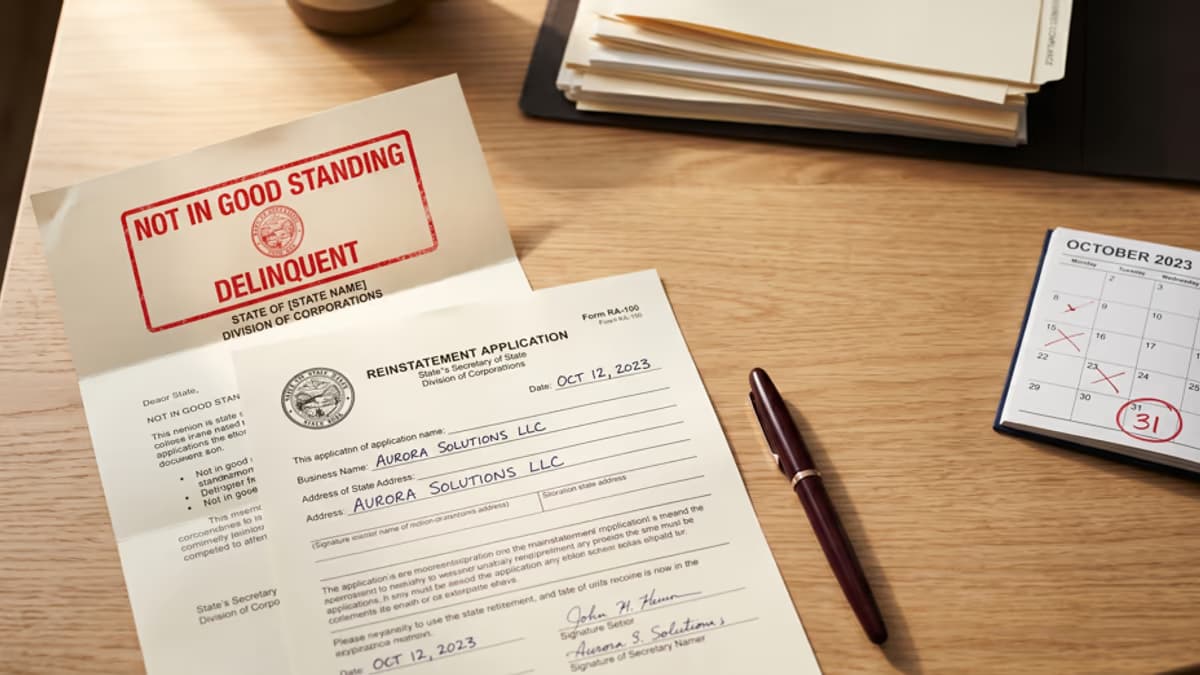
- W-9. Filled out by the freelancer at the start of the relationship. Core fields: name, business name (if different), federal tax classification (Line 3a) plus a checkbox for entities with foreign partners/owners/beneficiaries (Line 3b, added in the March 2024 revision), exemptions (rare), address, and TIN (SSN or EIN). The freelancer signs and sends to the client. The client keeps it on file.
- 1099-NEC. Issued by the client in January for the prior tax year. Required if the client paid the freelancer $2,000 or more during calendar year 2026 (threshold raised from $600 by the One Big Beautiful Bill Act, P.L. 119-21, effective for payments made after December 31, 2025; indexed for inflation thereafter). Two copies: one to the IRS, one to the freelancer (mailed to the address on the W-9).
- Schedule C. The freelancer's personal tax form (filed with Form 1040), reporting all 1099-NEC income plus any other self-employment income. Keeping the address consistent across W-9, 1099, and 1040 helps mail reach the freelancer reliably and reduces the chance of missing a 1099 envelope (the actual CP2000 underreporter notice is triggered by income mismatch, not address mismatch).
The address field on Form W-9: what the IRS rule actually says
The IRS Form W-9 instructions describe Line 5 as the address where the requester will mail the freelancer's 1099 information return. There is no requirement that this be the freelancer's residential address, no requirement that it match the address on the freelancer's Form 1040, and no requirement that it be a commercial address. The instructions are deliberately broad to accommodate freelancers, sole proprietors, single-member LLCs, multi-member LLCs, and corporations.
What the instructions do require is that the freelancer sign the W-9 under penalties of perjury, certifying that the TIN is correct and that the freelancer is not subject to backup withholding. The address on the W-9 carries no certification beyond being a valid mailing address for 1099 correspondence.
The single rule that matters: deliverable mail
The only IRS-side requirement on the Form W-9 address is that the address has to be deliverable mail. PO Boxes are accepted. Virtual office addresses are accepted. Suite numbers are accepted. Residential addresses are accepted. Unlike some bank Know Your Business (KYB) systems that flag Commercial Mail Receiving Agency (CMRA) classified addresses, the IRS keeps no CMRA blocklist for W-9 purposes. That makes the W-9 one of the more permissive address rules among IRS forms.
Ready to set up your business address?
See which US cities fit — about a minute, no card needed.
Sole proprietor versus LLC: how the W-9 changes
The W-9's Line 3a (federal tax classification) has seven boxes: Individual/sole proprietor or single-member LLC (one combined box), C corporation, S corporation, Partnership, Trust/estate, LLC (with sub-classification for C/S/P tax election), and Other. A single-member LLC treated as a disregarded entity checks the first box, not the LLC box. The choice changes which TIN goes in the TIN field and which name goes in the name field, but the address field rule is the same across all classifications.
| Classification | Name field | TIN field | Address field rule |
|---|---|---|---|
| Individual / sole proprietor (no LLC) | Freelancer's legal name | SSN, or EIN if the freelancer has one (the W-9 instructions allow either; ITIN if not eligible for an SSN) | Any deliverable address; commercial preferred for privacy |
| Single-member LLC (disregarded entity) | Freelancer's legal name (NOT the LLC name) | SSN or freelancer's EIN | Any deliverable address; using the LLC's business address keeps records consistent across IRS, bank, and client files |
| Single-member LLC (taxed as S-corp) | LLC name | LLC's EIN | LLC business address |
| Multi-member LLC (partnership) | LLC name | LLC's EIN | LLC business address |
| S-corporation (not LLC) | Corporation name | Corporation's EIN | Corporation business address |
How the Form W-9 fields change by tax classification. The disregarded-entity LLC is the only structure where the name on the W-9 is the freelancer's personal name despite the LLC owning the work.
For freelancers without an LLC, the W-9 lists the freelancer's personal name and SSN, with any deliverable address in the address field. For freelancers with a single-member LLC, the freelancer's personal name still goes in the name field (the IRS treats single-member LLCs as disregarded for tax purposes), but the LLC's business address goes in the address field. For S-corp and partnership-classified LLCs, the LLC name and EIN go in the name and TIN fields, with the LLC business address.
Where the 1099-NEC envelope lands every January
The 1099-NEC is mailed by the client to the address on the most recent W-9 on file. Most freelancers update the W-9 only when something significant changes (the client requests a refresh, the freelancer forms an LLC, the address changes). For a freelancer with five clients, the January 1099-NEC mailings can come from five different addresses, each going to whichever address was on the W-9 the client had on file at year-end.
- Volume. Freelancers with multiple clients typically receive several 1099-NEC envelopes each January, one per client that crossed the $2,000 threshold in calendar year 2026 (raised from $600 by P.L. 119-21). Plus 1099-K envelopes from any payment platform (Stripe, PayPal, Square) that crossed the platform threshold. The January–February mailing window concentrates IRS-related mail at the address on file.
- Privacy implications. Each envelope shows the freelancer's full name, the client's full name as the issuer, and arrives at the address on the W-9. A residential mailbox in a shared apartment, a roommate situation, or a household with mixed personal-and-professional mail handling can mean the 1099 envelope is opened by the wrong person, lost in apartment-hallway clutter, or tossed with junk mail.
- IRS correspondence routing. If the address on the freelancer's Form 1040 (filed in April) differs from the address on the 1099-NEC (issued in January), IRS notices may not reach the freelancer, which means a missed 1099 envelope can lead to underreporting on the next Schedule C, and an income mismatch is what actually triggers a CP2000 underreporter notice. The fix is to keep the W-9 address and the 1040 address consistent, which means a freelancer who switches from a home address to a virtual address has to update both at the same time.
The mid-year address change problem
If a freelancer updates the W-9 address mid-year, the client may issue the January 1099-NEC to either the old or the new address depending on when the client's payroll system pulled the W-9 record. Most clients pull the W-9 record at year-end, so the new address shows up on the 1099. A few clients pull at the time of each payment, in which case the 1099 reflects whichever address was on file at the start of the year. Plan address changes around year-end (December or January) to avoid 1099-NEC misrouting.
Multi-client and multi-platform: 1099-K versus 1099-NEC aggregation
A freelancer who receives client payments through multiple channels (direct ACH, Stripe Connect, PayPal Goods and Services, Wise Business) gets a mix of 1099-NEC and 1099-K envelopes. The 1099-NEC comes from the client; the 1099-K comes from the payment platform. Both are reported to the IRS, and the freelancer's Schedule C has to reconcile both against the actual income.
- 1099-NEC comes directly from the client, mailed to the W-9 address. The freelancer typically gets one per client per year (if the client paid $2,000+ in 2026; threshold raised from $600 by P.L. 119-21, effective for payments made after December 31, 2025). Common for retainers, project fees, and consulting engagements.
- 1099-K comes from the payment platform, mailed to the address on the platform account. Stripe, PayPal, and Square each issue their own 1099-K. The One Big Beautiful Bill Act (P.L. 119-21, §70432) reverted the 1099-K threshold to $20,000 in gross payments and more than 200 transactions per platform, repealing the American Rescue Plan Act phase-down. Direct ACH (Automated Clearing House) payments do not generate a 1099-K because no payment platform sits in the flow.
- Risk: double-counting. A client who pays through Stripe Connect generates both a 1099-NEC (from the client) and a 1099-K line item (from Stripe). The freelancer's Schedule C should report the income once, not twice. The IRS knows this and matches accordingly, but the freelancer's bookkeeping has to track the source to avoid underreporter disputes.
- Address consistency. All 1099 forms (NEC and K) should arrive at the same address. The Stripe account address, the PayPal account address, and every client's W-9 address should match. The companion guide on payment processor addresses covers the platform-side address management.
City-by-city scenario for freelancers
The W-9 address shows up on every client compliance file the freelancer is in, on every 1099-NEC envelope the freelancer receives, and on the freelancer's IRS records. A commercial business address signals professionalism in a way a residential apartment address does not, especially for freelancers selling into mid-market and enterprise clients where the procurement team reviews the W-9 before adding the freelancer to the vendor master.
| City | Best fit for | Client trust signal |
|---|---|---|
| New York, NY | Northeast clients, finance, media, agency | Manhattan business address signals credibility for finance, media, and agency clients |
| San Francisco, CA | Tech clients, SaaS, AI, startup ecosystem | SF address aligns with tech-sector vendor expectations |
| Wilmington, DE | LLC-formed freelancers using Delaware LLC structure | Delaware address pairs with Delaware LLC formation |
| Cheyenne, WY | Privacy-focused freelancers, lowest LLC fees | Wyoming address signals tax-efficient operation |
| Tampa, FL | Florida-based freelancers, no state income tax | FL address fits FL-based and digital nomad freelancers |
| Washington, DC | Government contracts, federal consulting | DC address signals federal-contracting capacity |
save office cities and the freelancer client-trust signals each conveys. The address choice should fit the freelancer's primary client base.
For most freelancers, the choice comes down to where the primary client base sits. A freelance designer working with West Coast tech clients gets the strongest trust signal from an SF address. A freelance copywriter working with NYC agencies gets the strongest signal from a Manhattan address. A freelance consultant working remotely across the country can pick whichever city aligns with the freelancer's preferred professional identity.
Where save office fits the freelancer's tax-form workflow
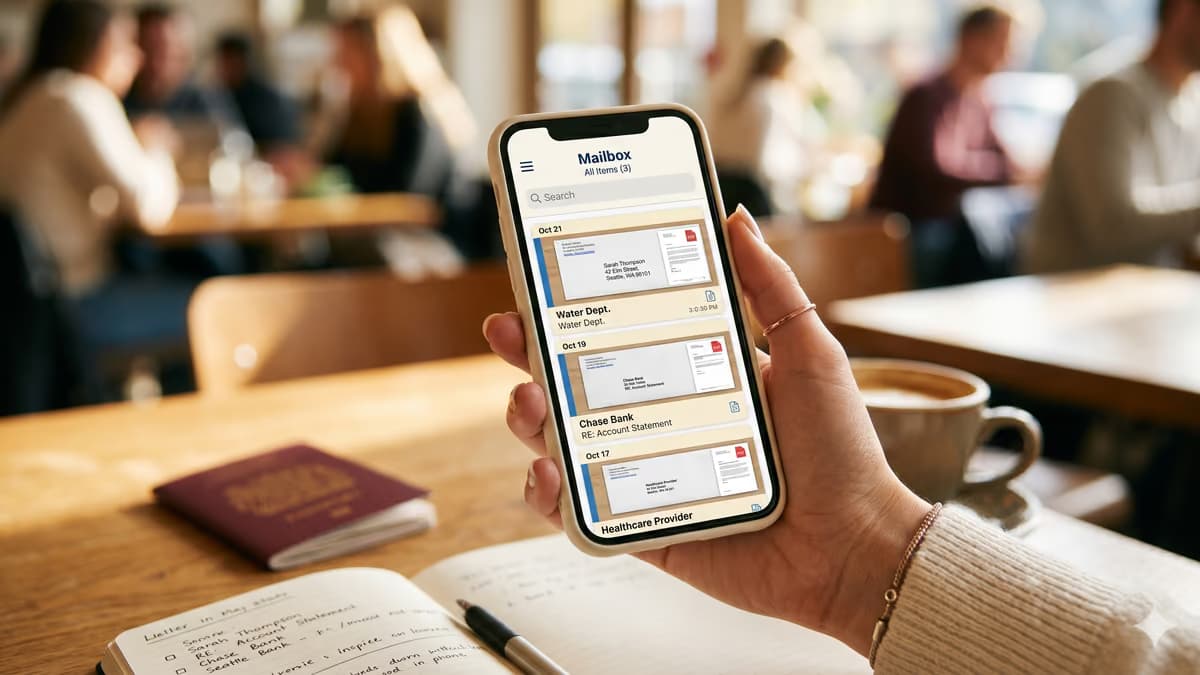
A real commercial business address with a license agreement on file naming the freelancer (or the freelancer's LLC) as the licensee keeps the W-9, 1099-NEC, and Schedule C records aligned. Without it, the W-9 carries the freelancer's apartment number into every client compliance file. With it, every client receives the same professional address, every 1099-NEC arrives at the same digital mailbox, and the freelancer's IRS records align across the W-9, the 1099 envelopes, and the Form 1040.
save office operates commercial-classified addresses across its US cities, with mail-scan service that turns every incoming 1099-NEC and 1099-K envelope into a digital PDF in the freelancer's mailbox. The activation means the W-9 address can update before the next client onboarding. The companion guides on keeping a home address private and virtual mailing addresses for individuals cover the personal-use and LLC-use angles in detail. The address-checker tool confirms whether a current address has the USPS commercial classification that matters for downstream IRS matching and bank verification.
Frequently Asked Questions
Not sure what you need?
Two short pages sort it out — what the products actually are, and which situation you're in.