Key takeaways
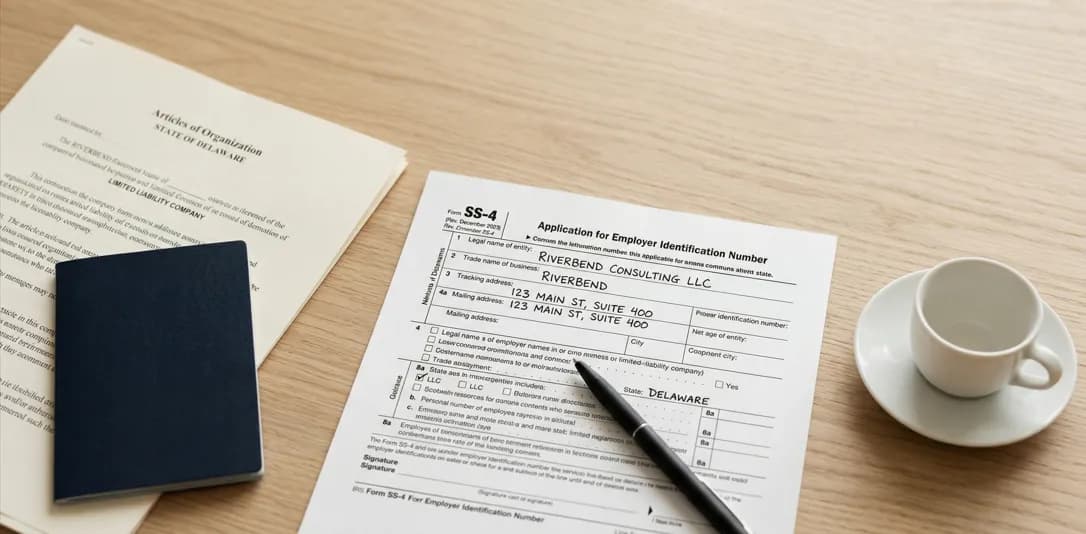
- Form SS-4, the EIN application, asks for a mailing address on Line 4 and the physical business location on Line 5 if it is different, so they are not interchangeable.
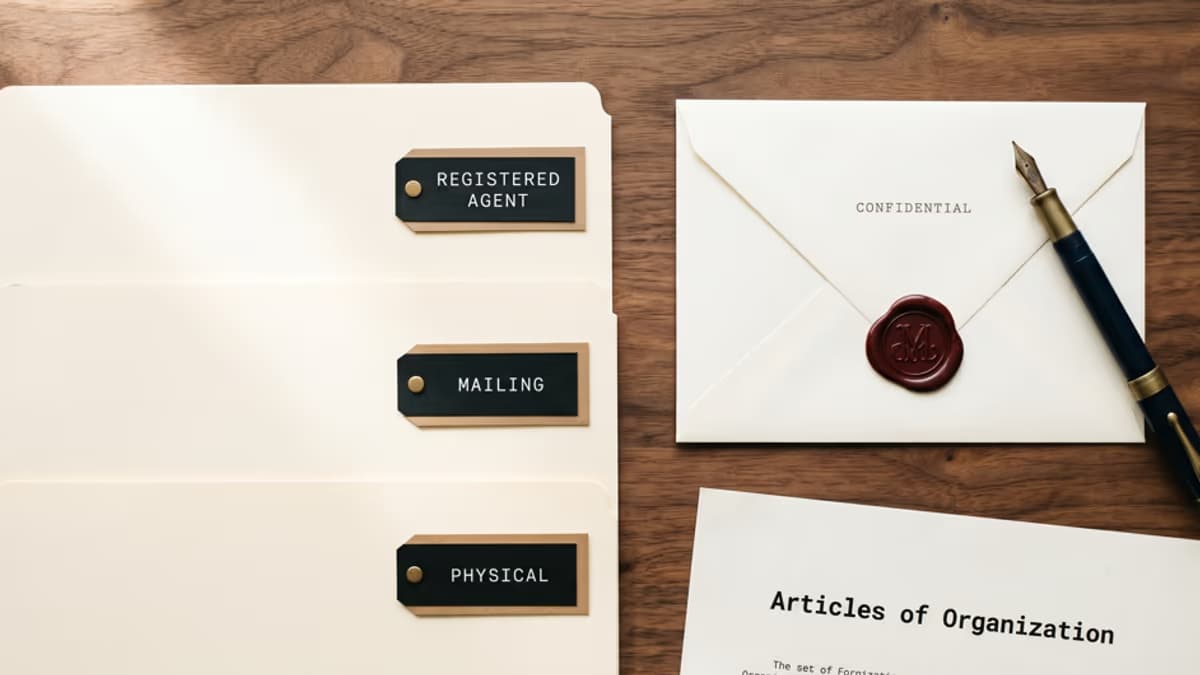
- A registered agent address is built for legal service of process, not for your business mail, so using it on Form SS-4 can leave the IRS and your bank with an address that does not match your real business.
- A virtual or professional business address generally works for both the mailing and physical lines, while a PO Box is allowed on the mailing line (Line 4) but not on the physical street-address line (Line 5).
Before you start
- Decide which address is your real business mailing address before you open Form SS-4, since that is what Line 4 should reflect.
- If you are a non-resident founder, line up your responsible party details, because Line 7 needs a name and a taxpayer ID.
Who this is for
- Founders applying for an EIN right after forming an LLC.
- Non-resident owners deciding what US address to put on Form SS-4.
- Anyone unsure whether a registered agent or virtual address belongs on the EIN application.
Form SS-4, the EIN application, asks for more than one address, and the lines are not interchangeable. The IRS wants a mailing address and, if different, the physical location of your business. Using a registered agent address, or mixing the two up, can cause mail and banking problems later.
This guide walks through what each address line on Form SS-4 is for, whether a registered agent or virtual address belongs there, what to do as a non-resident founder, and how to change the address afterward.
Setting up your LLC? See your US address options — no card →
Form SS-4 Asks for More Than One Address
The Employer Identification Number (EIN) application separates where you receive mail from where the business physically operates. Reading the lines correctly is most of the work.
| Line | What it asks for | What to put |
|---|---|---|
| 4a and 4b | Mailing address | Where the IRS should send mail for the business, which can be a professional business address |
| 5a and 5b | Street address of the business, if different from the mailing address | The physical location of the business, completed only when it differs from Line 4 |
| 7a and 7b | Responsible party and their taxpayer ID | The person who controls the entity, with a Social Security Number, an Individual Taxpayer Identification Number (ITIN), or an EIN |
Line 4 is your mailing address; Line 5 is the physical location only if it is different. The responsible party on Line 7 is a person, not an address.
Can You Use a Registered Agent Address?
This is where advice online contradicts itself. Forum answers sometimes say to use your registered agent address, while registered agent companies often say not to. The cleaner way to think about it is what the address is for.
- A registered agent address exists to receive legal service of process for the entity, not to be your day-to-day business mailing address.
- Putting it on Line 4 can mean the IRS, your bank, and your state all hold a different address for the business, which creates mismatches during verification.
- A better fit for Line 4 is the address where you actually want IRS mail to arrive and where it lines up with your bank records.
Keep the layers consistent
Banks compare the address on your EIN paperwork with the address on your account application. Using one consistent business mailing address across the EIN, the bank, and your filings prevents most verification headaches. For the distinction, see registered agent address vs business address linked below.
Ready to set up your business address?
See which US cities fit — about a minute, no card needed.
Can You Use a Virtual Address?
A professional or virtual business address generally works for the mailing and physical lines on Form SS-4, as long as it is a real address where mail is received on your behalf. The thing to confirm is how that address is classified, since that is what banks and agencies check later.
Before you put an address on the application, run it through our free Address Checker to see how it is classified. You can set up a professional business address in a US city through save office onboarding, often within a day, so it is ready before you file for the EIN.
What About a PO Box?
On Form SS-4 the rule is about which line the address goes on. Line 4 is the mailing address, and the form's own label in the IRS instructions for Form SS-4 reads 'street, or P.O. box,' so a PO Box is allowed there. Line 5 is the physical street address, and the form says 'Don't enter a P.O. box,' so it is not allowed there. Even so, a real street address is the stronger choice, because banks and many agencies do not accept a PO Box as a business address.
Non-Resident Founders and the Address Question
If you are forming a US LLC from abroad, the EIN application still needs a usable address, and you may not have a US one yet. A US business address with mail handling fills the mailing line and gives the IRS somewhere to send notices that you can actually receive.
- The mailing address on Line 4 can be a US business address where your mail is scanned, so IRS notices do not sit in a box you never check.
- The responsible party on Line 7 is a person, identified by a Social Security Number, ITIN, or EIN, or noted as foreign if they have none of these, which is separate from the address question.
- Applying without a Social Security Number changes how you file Form SS-4, which is covered in our guide below.
For the full process of getting an EIN without a Social Security Number, see getting an EIN as a foreign founder. For how the three address roles fit together, read the three business addresses every LLC needs.
Changing the Address Later
The address on your EIN is not permanent. If your business address changes, you update it with the IRS using Form 8822-B, which also covers a change of responsible party. Getting the address right at application time is still worth it, because it keeps your records consistent from the start.
The address on Form SS-4 is not one field, it is a mailing address, a physical location if different, and a responsible party who is a person rather than an address. Put your real business mailing address on Line 4, use the physical location on Line 5 only when it differs, and avoid leaning on a registered agent address that is built for a different job.
Match the address on the EIN to the one on your bank application and your state filings, confirm how it is classified before you submit, and you will sidestep the verification problems that catch founders after the EIN is already issued.
Frequently Asked Questions
Sources & References
Primary sources this guide is based on.
- 1IRS · Instructions for Form SS-4, address lines and filing routes (accessed July 14, 2026)
- 2IRS · Form 8822-B, Change of Address or Responsible Party (accessed July 26, 2026)
Not sure what you need?
Two short pages sort it out — what the products actually are, and which situation you're in.
Watch this in 60 seconds
Henry covers the same ground on video.