Short answer
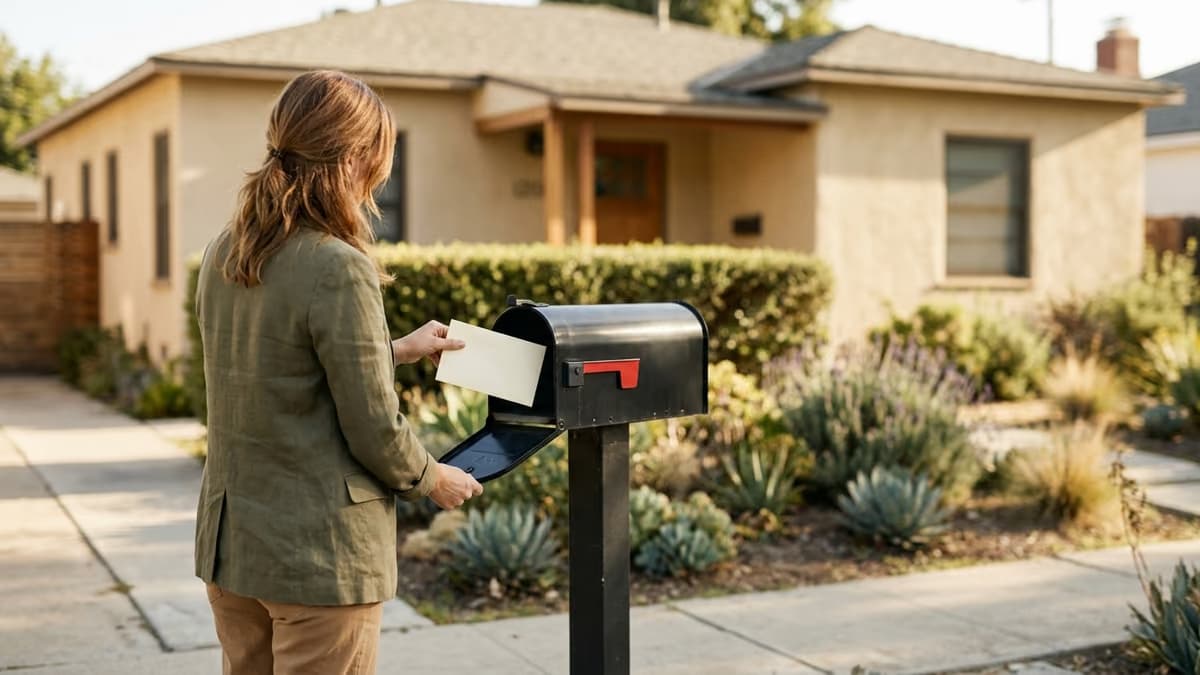
Your EFTPS PIN arrives as a paper letter. EFTPS.gov says you receive it “via U.S. Mail in five to seven business days at your IRS address of record.” That address is the one the IRS has on file for your EIN. If no letter comes, call EFTPS at 1.800.555.4477.
Key takeaways
- The PIN goes to the IRS address on file. The EFTPS.gov home page says the PIN comes “via U.S. Mail in five to seven business days at your IRS address of record.”
- EFTPS cannot fix that address. The EFTPS FAQ says businesses change an address by contacting the IRS at 1.800.829.4933, and “you cannot make these changes at EFTPS.”
- A lost PIN is mailed again. The EFTPS FAQ says to call 1.800.555.4477 and “we’ll resend it to you by U.S. Mail,” and that the PIN “can’t be given to you over the phone.” The one phone exception is a pre-enrolled new business that never got its first letter.
- You can still pay while you wait. The EFTPS FAQ says to call 1.800.555.4477 two business days after you enroll, and an agent can take your payment if your information matched IRS records.
- An IRS address change takes time. The IRS address change FAQ says it “can generally take four to six weeks after receipt” to fully process.
- We counted the wait times. Six EFTPS.gov and IRS documents we saved give the wait in seven statements and five different time frames. The EFTPS.gov home page, FAQ, and About EFTPS page each say something different.
How the EFTPS PIN letter works
EFTPS is the Electronic Federal Tax Payment System, a free U.S. Treasury service for paying federal taxes. The EFTPS FAQ says online payments need your employer identification number (EIN) or Social Security number (SSN), a personal identification number (PIN), and an Internet password.
The PIN is four digits, and EFTPS sends it on paper. The EFTPS.gov home page says your information is first “validated with the IRS.” Then, it says, “you will receive a personal identification number (PIN) via U.S. Mail in five to seven business days at your IRS address of record.”
The address on the envelope comes from the IRS. The About EFTPS page on EFTPS.gov lists three things you need to enroll. One of them is your “Address and name as they appear on your IRS tax documents.” The EFTPS FAQ explains how your details reach EFTPS, with SSA standing for the Social Security Administration: “The IRS processes the information it receives from you or SSA, then transmits it to this tax payment service.” So an old address at the IRS means an old address on the PIN letter.
Individuals now use other IRS tools
The EFTPS.gov home page says that from October 17, 2025, “Individuals will not be able to create new enrollments via EFTPS.gov.” New individual payers use IRS Direct Pay or an IRS Online Account instead. This guide is about business enrollments.
Did this answer your question?
Three ways a PIN reaches you
Not every business gets its PIN the same way. The EFTPS FAQ describes three paths. In only one of them can an agent read the PIN to you by phone.
Pre-enrolled new businesses come first. The FAQ says a new business that “indicated a likely federal tax deposit liability” when it applied for its EIN is pre-enrolled. That business “should have received a letter with your four-digit EFTPS® PIN.” If it did not, the FAQ says to call 1.800.555.4477, and the agent can give the PIN after you give your EIN. The FAQ says this is the only case where a PIN is given by phone. It gives the reason: “you haven’t yet added banking information to your enrollment.”
Businesses that enroll online are the second path. The FAQ says: “In five to seven days after you submit the enrollment, you’ll receive your PIN and enrollment number via U.S. Mail.”
Changing your bank account is the third path. The FAQ says you create an additional enrollment, and “you will self select a new EFTPS® PIN associated with the new financial institution account.” That PIN does not come in the mail.
| Situation | How the PIN arrives | Can an agent read it to you by phone |
|---|---|---|
| New business pre-enrolled when it got its EIN | Letter by mail | Yes, the FAQ says this is the only case |
| Business enrolling online | Letter by U.S. Mail with the enrollment number | No |
| Lost PIN (the FAQ answer “I can’t find my PIN”) | Resent by U.S. Mail | No, the FAQ says it “must be mailed” |
| New bank account (additional enrollment) | You choose it yourself online | Not needed |
Three enrollment paths from the EFTPS FAQ, plus its answer for a lost PIN, read on October 17, 2026.
Ready to set up your business address?
See which US cities fit — about a minute, no card needed.
How long to wait: we counted the official wording
We saved the EFTPS.gov and IRS pages and documents we read for this guide. A script pulled every sentence in them that gives a number of days for the PIN to arrive or for an enrollment to be processed. The script left out day counts for other steps, such as a later confirmation package and a bank account check. Six documents had such sentences, eight sentences in all. One of them is about calling to pay before the PIN arrives, so we left it out. The other seven give five different time frames: five to seven business days, five to seven days, seven business days, up to five business days, and five business days.
| Document | What it says about the wait | Counted from |
|---|---|---|
| EFTPS.gov home page | “five to seven business days” | After the IRS validates your information |
| EFTPS FAQ | “five to seven days” | After you submit the enrollment |
| EFTPS.gov About EFTPS page | “In seven business days” | After you submit an online enrollment |
| IRS Publication 966 (Rev. 03-2012), online | “within five to seven business days” | Not stated (online enrollment) |
| IRS Publication 966 (Rev. 03-2012), paper form | “within seven business days” | After EFTPS receives the completed form |
| IRS EFTPS page (reviewed or updated June 28, 2026) | “can take up to five business days to process” | Processing of a new enrollment |
| IRS Publication 4275 (10-2007) | “within 5 business days after receiving the EIN” | Pre-enrolled new businesses |
Seven statements from six documents, read on October 17, 2026. The IRS page gives a processing time, and the others give a delivery time.
Two of these documents are old. Publication 4275 is dated October 2007, and it still tells readers how to order paper Federal Tax Deposit coupons. Publication 966 is dated March 2012. The current EFTPS.gov pages also differ from each other. The home page says five to seven business days, the FAQ says five to seven days, and the About EFTPS page says seven business days. The current EFTPS.gov pages we read do not say when to call if the letter is late. The 2007 Publication 4275 told pre-enrolled businesses to call if more than one week had passed since they received their EIN. If you enrolled online, we would call EFTPS once seven business days have passed with no letter. We took that number from the About EFTPS page. The letter may still be in the mail then, because the home page counts from IRS validation and the IRS page says processing can take up to five business days.
Third-party guides give their own numbers. The four we could open in the search results for this topic said up to 7 business days, about 7 business days, 5 to 7 business days, and seven to 10 days. One of them says the letter goes to “the address specified during registration.” EFTPS.gov says it goes to your IRS address of record.
What to do if the PIN letter never arrives
First, check which address the IRS has. The letter goes to that address, so it may be sitting at a former office or a former home. If you recently moved, look there before you call.
Then call EFTPS. The FAQ answer for “I can’t find my PIN” says: “Call 1.800.555.4477 and we’ll resend it to you by U.S. Mail.” The same answer says: “For security reasons, your PIN must be mailed; it can’t be given to you over the phone.” The EFTPS Contact Us page lists 1.303.967.5916 as a toll call for callers outside the United States.
One case is different. In the FAQ’s answer about enrolling, a pre-enrolled new business that never received its first PIN letter can call 1.800.555.4477, and the agent can give the PIN after you give your EIN.
If a tax payment is due before the letter arrives, you have an option. The FAQ says to call 1.800.555.4477 “two business days after completing your enrollment.” If your information matched IRS records, an agent can take your payment. The agent still cannot give you the PIN.
If EFTPS rejects your enrollment, the problem may be your name or EIN. The EFTPS Contact Us page lists the IRS e-help Desk at 1.866.255.0654 for “rejected registrations dealing with social security/employer identification number and name mismatch.”
A resent PIN may go to the same old address
The FAQ answer about a lost PIN does not say which address the new letter goes to. The home page says PINs go to your IRS address of record. So if that address is out of date, our reading is that you should fix it with the IRS first.
When the IRS has your old address
EFTPS cannot change the address. The FAQ says: “Businesses: To change an address, name, or EIN, contact the IRS at 1.800.829.4933.” It adds: “Please note you cannot make these changes at EFTPS®.”
The IRS address change FAQ lists four ways to tell the IRS. You can file Form 8822-B, use the new address on your tax return, mail a signed written statement, or tell the IRS in person or by phone. A written statement needs your full name, old and new addresses, and your SSN, individual taxpayer identification number (ITIN), or EIN. The same FAQ says that changing your address with the U.S. Postal Service (USPS) “may update your address of record” through the National Change of Address database.
Timing matters for the PIN. The IRS address change FAQ says: “It can generally take four to six weeks after receipt for a change of address request to fully process.” Form 8822-B gives the same range: “Generally, it takes 4 to 6 weeks to process your address or responsible party change.”
Here is the order we would use. First, change the address with the IRS. Second, wait for the change to process. In our reading, Notice 148A at the new address is a sign that the change has been processed. Third, call EFTPS and ask for the PIN to be resent. None of the pages we read describes this order. This order is our reading of the EFTPS and IRS pages together.
The IRS page on Notice CP148A explains that notice. The page says the IRS changes a business mailing address when it receives “an employment tax return or Form 8822-B” with a new address. The IRS then sends Notice 148A to the new address and 148B to the former one “to confirm the address change.”
Our guide to Form 8822-B walks through the form line by line. We would use the same order for other IRS letters that are mailed to the address on file, such as the 147C EIN verification letter.
What Form 8822-B asks for
We read both pages of Form 8822-B (Rev. December 2019). The About Form 8822-B page on IRS.gov lists this revision as current. The form has lines numbered 1 to 10, and line 4 has two parts, 4a and 4b. Three lines hold addresses: line 5 is the old mailing address, line 6 is the new mailing address, and line 7 is the new business location.
The mailing address and the business location are separate lines. The form’s instructions say it is used if you changed “your business mailing address, your business location, or the identity of your responsible party.” The PIN letter is mail, and our reading is that the mailing address line is the one that controls it. The EFTPS pages we read do not name a Form 8822-B line.
| Line on Form 8822-B | What it asks for | Other text on the form or in its instructions |
|---|---|---|
| Lines 1 to 3 | Check boxes for what the change affects | Line 3 is “Business location” |
| Lines 4a and 4b | Business name and EIN | None |
| Line 5 | Old mailing address | The form says “If a P.O. box, see instructions” and has foreign country, province, and postal code spaces |
| Line 6 | New mailing address | Same P.O. box note and foreign address spaces as line 5. The instructions allow a box number only “if your post office does not deliver mail to your street address” |
| Line 7 | New business location | The form has foreign country, province, and postal code spaces |
| Lines 8 and 9 | New responsible party and their SSN, ITIN, or EIN | The instructions say to report a change “within 60 days” |
| Line 10 | Signature | A representative must attach a power of attorney |
From Form 8822-B (Rev. December 2019), read on October 17, 2026.
Two more instructions matter for a mailing address. For a P.O. box, the form says: “Enter your box number instead of your street address only if your post office does not deliver mail to your street address.” For mail handled by someone else, it says: “If you receive your mail in care of a third party (such as an accountant or attorney), enter ‘C/O’ followed by the third party’s name and street address or P.O. box.” For a foreign address, the instructions say: “Follow the country’s practice for entering the postal code. Please do not abbreviate the country name.” The form does not use the words virtual, mail forwarding, or mailbox. So it does not answer whether such an address fits line 6. If you are unsure, ask the IRS at 1.800.829.4933.
The form goes to one of two IRS addresses. You choose by the state of your old business address: Internal Revenue Service, Kansas City, MO 64999, or Internal Revenue Service, Ogden, UT 84201-0023. The Ogden list also includes “any place outside the United States.”
Choosing the mailing address for your IRS record
The PIN letter only helps if someone at that address opens the company’s mail and you see it in time. The same is true for other IRS letters. Form 8822-B says that if you do not give the IRS your current mailing address, “you may not receive a notice of deficiency or a notice of demand for tax.” It adds that penalties and interest “will continue to accrue” even if those notices do not reach you.
IRS Publication 966 (Rev. 03-2012) says a taxpayer located outside the United States can enroll in EFTPS with a U.S. banking account. That publication is from 2012, so check with EFTPS that it still applies. The EFTPS pages we read do not say whether a PIN letter is mailed outside the United States. Ask EFTPS at 1.303.967.5916 before you rely on a foreign address for the letter.
Before you put a new address on Form 8822-B, our free address checker shows its USPS classification as Commercial, Residential or Unknown. The checker also shows whether USPS data flags the address as a commercial mail receiving agency (CMRA). The checker does not test for P.O. boxes. Our guide on how to tell if an address is a P.O. Box covers that question.
Our Silicon Valley and Los Angeles pages describe the business addresses save office offers.
Not tax advice
This guide summarizes EFTPS.gov pages, IRS pages, IRS publications, and Form 8822-B as read on October 17, 2026. EFTPS procedures change from time to time. Call EFTPS or the IRS about your own enrollment, and ask a tax professional about payment deadlines that apply to you. When we opened the EFTPS FAQ from a direct link, it showed “Session Expired.” Opening the EFTPS.gov home page first and then its FAQ link worked for us.
Frequently Asked Questions
Sources & References
Primary sources this guide is based on.
- 1U.S. Department of the Treasury, Bureau of the Fiscal Service · EFTPS home page, enrollment and PIN notice (accessed October 17, 2026)
- 2U.S. Department of the Treasury, Bureau of the Fiscal Service · EFTPS Frequently Asked Questions (accessed October 17, 2026)
- 3U.S. Department of the Treasury, Bureau of the Fiscal Service · EFTPS Contact Us (accessed October 17, 2026)
- 4U.S. Department of the Treasury, Bureau of the Fiscal Service · About EFTPS (accessed October 17, 2026)
- 5Internal Revenue Service · EFTPS: The Electronic Federal Tax Payment System (accessed October 17, 2026)
- 6Internal Revenue Service · Publication 966, Electronic Federal Tax Payment System, A Guide to Getting Started (accessed October 17, 2026)
- 7Internal Revenue Service · Address changes, frequently asked questions (accessed October 17, 2026)
- 8Internal Revenue Service · Form 8822-B, Change of Address or Responsible Party, Business (accessed October 17, 2026)
- 9Internal Revenue Service · Understanding your CP148A notice (accessed October 17, 2026)
Not sure what you need?
Two short pages sort it out — what the products actually are, and which situation you're in.

save office
Published
I'm Henry, a hedgehog in a bow tie who explains the dull, scary parts of building and running a U.S. business.