Short answer
USPS Form 1583 is used to authorize a commercial mail receiving agency, such as a virtual mailbox service, to accept mail for you at its address. You sign it and attach copies of two IDs, and the agency keeps the form and uploads it to a USPS database. The form covers receiving, collecting, and forwarding your mail. The form has no line about opening envelopes, so check the provider’s terms for that.
Key takeaways
- PS Form 1583, the Application for Delivery of Mail Through Agent, lets a commercial mail receiving agency (CMRA), such as a virtual mailbox service, accept your mail.
- The form covers delivery of your mail to the agent, pickup by people you authorize, and sending mail to another address. The form has no line about opening envelopes or scanning what is inside.
- The agent keeps a copy of your form and uploads it to a USPS database. The postmaster and the Postal Inspection Service can examine the agent’s copy.
- The form’s Privacy Act Statement says USPS does not disclose your information to third parties without your consent, except in limited cases it lists, such as legal proceedings involving the Postal Service and law enforcement purposes.
- Whether a provider opens or scans your mail depends on what you authorized and on the provider’s terms. The USPS rules for agents do not set a scanning time or a payment for lost items.
- USPS indemnity claims cover insured mail, collect on delivery items, Registered Mail with postal insurance, and Priority Mail Express. For a loss after the agent received your mail, start with the provider.
What is USPS Form 1583 used for?
USPS Form 1583 is used to authorize a commercial mail receiving agency, such as a virtual mailbox service, to accept your mail at its address. You sign the form and attach copies of two IDs, and the agency keeps the form and uploads it to a USPS database.
The form’s official title is Application for Delivery of Mail Through Agent. The agent is the business that receives your mail. USPS rules call that business a commercial mail receiving agency, or CMRA. The rules define a CMRA as a business that accepts mail for another person or business as a business service, and they treat an office business center as a CMRA too.
The rules are in the Domestic Mail Manual (DMM), which holds the USPS mailing standards. The manual links delivery to the form. If an agency has no Form 1583 on file for a person, the manual says the agency must return that person’s mail to the Post Office.
To fill in each box, read our guide on how to fill out USPS Form 1583. That guide also covers the two ID types and the ways to sign, including before a notary.
Did this answer your question?
What does USPS Form 1583 authorize the agent to do?
Form 1583 authorizes one business, the agent, to receive your mail. USPS rules describe the agent’s job in one sentence: “The CMRA accepts delivery of the mail and holds it for pickup or remails it to the addressee, prepaid with new postage.”
The form also says who else can collect the mail and where the mail can go. Three parts of the form set that scope:
- Authorized individual (item 5): the form says “The Applicant authorizes mail to be collected by the individual noted in item 5.”
- Additional recipients (item 12): for business use, you list the members who will receive mail at the mailbox. Each person listed must show two forms of valid ID to the Postal Service on request.
- Another address (item 6): you complete item 6 if mail addressed to the mailbox is “to be transferred, mailed, shipped, or emailed to another address.”
The applicant and any authorized individual each need two IDs. Footnote 9 says “One ID must be a government-issued photo ID,” and the second ID must confirm the address listed on the form.
You must sign or confirm your signature in front of the agent or its authorized employee, in person or by real-time audio and video. You can instead acknowledge it before a notary commissioned in a US state, territory, possession, or the District of Columbia. By signing, you certify that the information on the form is “accurate, truthful, and complete.”
The agreement on the form sets duties for both sides. Neither you nor the agent may file a USPS change of address when the agency relationship ends. You must file an updated form with the agent when any information on it changes.
Want to see your mail as it arrives?
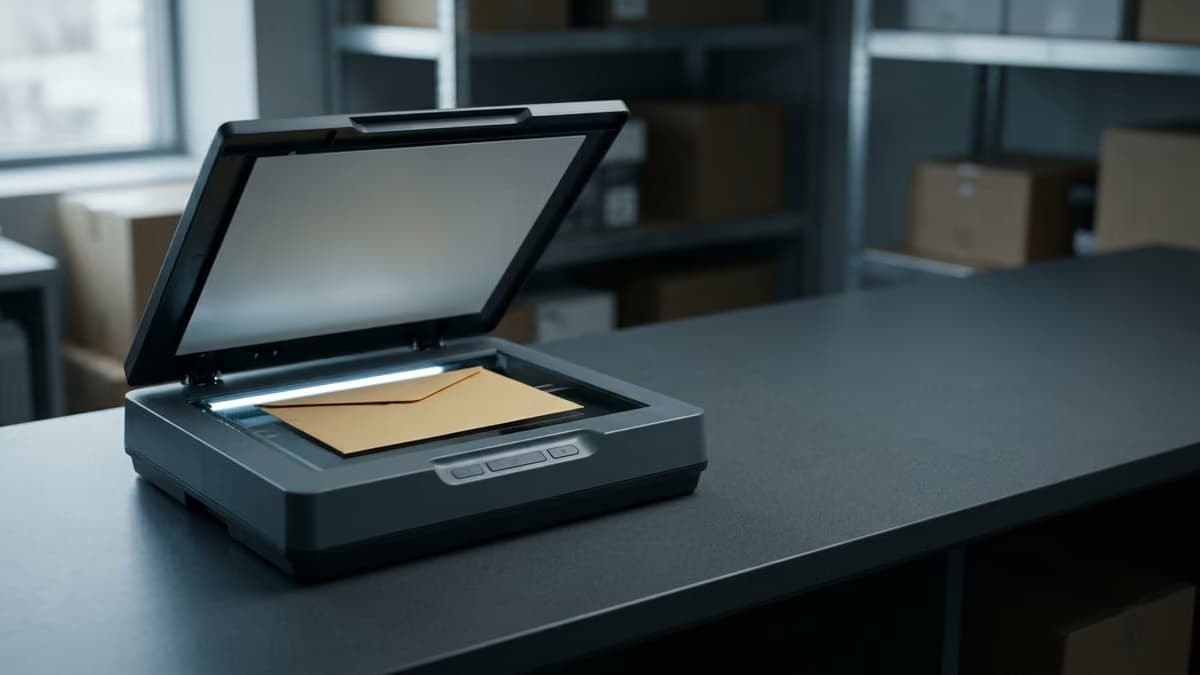
Every envelope that reaches a save office address is photographed, so you can see what came in and decide what happens next.
Is USPS Form 1583 public record?
The form itself says where it goes. The agent uploads the signed form to the Postal Service’s CMRA Customer Registration Database and keeps a copy at its business location. The agent’s copy must be available at all times for examination by the postmaster or a designee and by the Postal Inspection Service.
USPS rules add a detail about your form and IDs. The agent must keep at least a digital copy of the completed form. The agent does not have to keep the ID images after it uploads them to the database.
The form’s Privacy Act Statement covers what USPS does with your information. The statement says “We do not disclose your information without your consent to third parties,” except in limited cases. Those cases include legal proceedings involving the Postal Service and law enforcement purposes, among others the statement lists.
One more line covers the address itself. USPS may disclose information to identify an address as the address of an agent that receives mail for other people. The statement adds that this use “does not authorize the disclosure of the identities of persons on behalf of whom agents receive mail.”
If you filed an appropriate protective court order with the application, the statement says information about you will not be disclosed except under an order of a court of competent jurisdiction. That disclosure is also subject to approval by the USPS General Counsel.
We read these lines to mean the form is not open for the public to read. Your mailbox address is a separate matter. If you print the address on a website or a public filing, people can see it there. Our guide on how to check if an address is a CMRA explains the USPS record for an agent’s address, and our free address checker shows how USPS classifies an address.
Can a virtual mailbox open your mail?
Form 1583 does not answer this question by itself. Its wording covers receiving your mail, handing it to people you list, and sending it to another address. Item 6 mentions mail that is emailed to another address, but the June 2024 form has no checkbox or line about opening envelopes or scanning what is inside.
The USPS rules for agents mention scanned mail in the rule for closed mailboxes. After a mailbox closes, the agent must remail your mail for at least 6 months, unless you tell it in writing not to. You give a remail address on the form “(or email if correspondence is scanned for digital delivery).” We read that line as showing that USPS knows some agents deliver mail as scans.
The agent rules do not say when an agent may open a piece of mail. A federal statute on obstruction of correspondence, 18 U.S.C. 1702, covers a letter, postal card, or package taken from a post office, an authorized mail depository, or a mail carrier. The statute also covers mail that has been in one of those places or in a carrier’s custody. In both cases, the mail is taken “before it has been delivered to the person to whom it was directed.”
The statute names taking that mail with intent to obstruct the correspondence or to pry into another person’s business or secrets. The same sentence also names a person who “opens, secretes, embezzles, or destroys” that mail. This guide does not say whether the statute applies to any provider or any envelope. For a specific case, ask a lawyer.
Apart from the law itself, two documents set what a virtual mailbox may do with your mail. The first is Form 1583, with the people and addresses you list on it. The second is the agreement you accept when you sign up with the provider. Read that agreement for when the provider opens mail, who on its staff may do so, and whether it waits for your request.
Is a virtual mailbox safe?
A virtual mailbox service accepts mail for other people as a business, which fits the USPS definition of a CMRA. USPS rules say “An addressee may request mail delivery to a CMRA.” The rules also bar using a private mailbox for a scheme or enterprise that violates federal, state, or local law.
USPS rules set duties that every agent must meet. Here is what the rules require of an agent:
- Register with the Post Office responsible for delivery, using PS Form 1583-A.
- Check your IDs against your form, and deny the application if the form does not match the IDs.
- Keep at least a digital copy of your completed form, and upload your form details and a clear copy of each ID to the USPS CMRA Customer Registration Database.
- Certify in that database each quarter that every form it submitted is current, all termination dates are updated, and no ID is expired.
- Remail your mail for at least 6 months after you close the mailbox, unless you give written instructions not to.
An agent that breaks these rules can lose its authorization. The rules say such agents “will be suspended from authorization to act as a CMRA until the CMRA complies with regulations.” If the agent does not comply in 30 days or less, the Postal Service may end its authorization to accept mail for others.
The USPS rules for agents do not set a time limit for scanning or forwarding, rules for storing scans, or an amount the agent pays for a lost item. Look for those points in each provider’s terms, and compare the terms before you choose.
If you are comparing a virtual mailbox with a PO Box or with handling mail at your own office, our guide on digital mailroom and virtual mailbox options compares them. Our guide to non-CMRA addresses explains what a CMRA record on an address means.
What can you do if your mail is lost, thrown away, or delayed?
Start by finding where the mail was when the problem happened. USPS carries the mail until it reaches the agent. After that, the agent holds the mail, and the form’s agreement says the transfer of mail to another address “is the responsibility of the applicant and the agent.”
| Where the problem happened | What you can do |
|---|---|
| Before the mail reached the agent | Check USPS Tracking if the item has tracking. You can submit a USPS Missing Mail search request starting 7 days from mailing. If the item was insured, the sender or the recipient may file a claim, and the person filing must have the original mailing receipt. |
| After the agent received the mail | Ask the provider for its record of the item, such as the date it arrived and any envelope image or scan. Read what its terms say about lost items. |
| The agent threw the mail away or shredded it | Check the terms on how long mail is stored and when it is shredded. Ask the sender for a new copy if you need one. |
| Mail is slow to be scanned or forwarded | Check whether the provider’s terms promise a time, and what the terms offer if the provider misses it. The USPS rules for agents do not set that time. |
| You are closing the mailbox | Do not file a USPS change of address. Give the agent a remail address. USPS rules require the agent to remail your mail for at least 6 months, unless you tell it in writing not to. |
The USPS claim rules let a customer file an indemnity claim for four kinds of mail:
- Insured mail
- Collect on delivery (COD) items
- Registered Mail with postal insurance
- Priority Mail Express
An ordinary letter sent without one of these services is not on that list. The USPS claims page says “Either the sender or the recipient may file a claim for insured mail that is lost, arrived damaged, or was missing contents” (checked November 21, 2026).
If the mail was lost after the agent received it, start with the provider. Each provider writes its own terms, so read the ones you agreed to.
If you have mail forwarded to another country, our guide on international mail forwarding for a non-resident LLC covers carriers, customs basics, and when to scan instead of forward.
Checklist: terms to check in a virtual mailbox agreement
Check each of these points in the provider’s agreement, or ask the provider, before you sign up:
- Who may open your mail, and whether the provider opens any mail without your request.
- Whether the provider scans every item or only the items you ask for, and who at the company can see the scans.
- How long the provider keeps scans, envelope images, and paper mail, and how you can delete them.
- When the provider shreds or throws away mail, and whether it asks you first.
- Any time the provider promises for scanning or forwarding, and what you get if it misses that time.
- Whether the provider pays for lost or damaged items, and any limit on what it pays.
- Whether the provider says it is registered with its Post Office as a CMRA, as USPS rules require.
- Who is listed on your Form 1583 as an authorized individual or additional recipient, and how you update the form when that changes.
- What happens to your mail after you close the account, and where the provider will remail it.
The same questions apply to every provider, including save office. Our Silicon Valley and Los Angeles pages describe the business addresses save office offers.
Not legal or tax advice
This guide summarizes PS Form 1583 (June 2024 edition) and the CMRA rules in section 508.1.8 of the Domestic Mail Manual. The guide also draws on the federal statute on obstruction of correspondence and the USPS claims and missing mail pages, as read on November 21, 2026. USPS can change its forms and rules, and each provider writes its own terms. Ask your provider about its terms, and ask a lawyer about your own situation.
Frequently Asked Questions
Next step
Pick the address your Form 1583 will name
Nothing is charged on the order page.
Sources & References
Primary sources this guide is based on.
- 1United States Postal Service · PS Form 1583, Application for Delivery of Mail Through Agent (June 2024) (accessed November 21, 2026)
- 2United States Postal Service · Domestic Mail Manual 508, Recipient Services (section 1.8, Commercial Mail Receiving Agencies) (accessed November 21, 2026)
- 3Legal Information Institute, Cornell Law School · 18 U.S. Code 1702, Obstruction of correspondence (accessed November 21, 2026)
- 4United States Postal Service · Domestic Mail Manual 609, Filing Indemnity Claims for Loss or Damage (accessed November 21, 2026)
- 5United States Postal Service · File a USPS Claim: Domestic (accessed November 21, 2026)
- 6United States Postal Service · Find Missing Mail (accessed November 21, 2026)
Not sure what you need?
Two short pages sort it out — what the products actually are, and which situation you're in.

save office
Published
I'm Henry, a hedgehog in a bow tie who explains the dull, scary parts of building and running a U.S. business.