Short answer
In several of the states people form in, the formation filing does not ask an LLC to state a business purpose, and where it does the statement can be as broad as any lawful act or activity, so changing what you sell does not force a refiling. The IRS states plainly that you do not need a new EIN if you just change your business name or address, because the EIN, the Employer Identification Number, belongs to the entity and not to the product line. What a rebrand usually needs is a trade name, a DBA registered with your state or county, which leaves the entity, the EIN, and the bank account exactly where they are. A second entity is a real option when liability or a new partner calls for it, but then moving your assets is a transaction between two legal persons: a bill of sale, a brand-new EIN, and a new bank account that means new know-your-customer checks.
Key takeaways
- An LLC is a liability shield with a name on it. Selling honey and teaching beekeeping classes are both just things the same LLC does.
- The IRS position is plain: you do not need a new EIN if you just change your business name or address. The EIN is tied to the entity, not the product line.
- A DBA, or trade name, gives you a new brand without touching the underlying LLC, the EIN, or the bank relationship. For most solo pivots it is the lighter-weight move.
- A second entity is a transaction, not a migration. Two legal persons, a bill of sale, a brand-new EIN, and a new bank account that means new KYC.
- On the help pages we read, no platform records a transfer between two legal entities. YouTube at least documents an owner handover through a Brand Account; past that it is updating the account you already have, or starting over.
The instinct is to treat a pivot like a demolition
Someone runs a small honey business. It’s been fine, not huge, but steady. Now they want to pivot: instead of selling jars of honey, they want to teach people how to keep bees. Same hives, same knowledge, completely different product. Their first instinct is to treat this like a demolition project. Dissolve the LLC. Form a new one. Start moving everything over: the Instagram page, the Facebook group, the EIN, whatever counts as “assets” in a one-person operation.
I’ve watched this instinct show up a lot, and it’s almost always more work than the situation calls for.
What an LLC is, legally
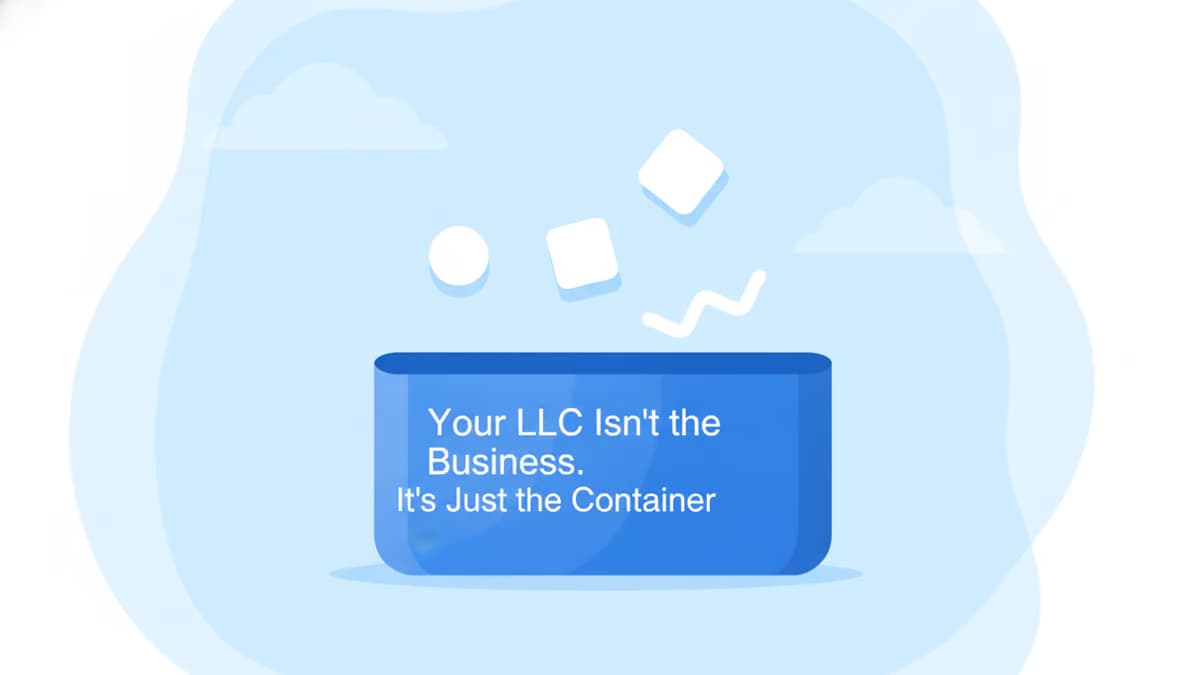
Here’s the thing an LLC actually is, legally: a container. A liability shield with a name on it, registered with a state, holding whatever business activity you decide to put inside it. The “business purpose” line on your Articles of Organization is, in the states that ask for one at all, usually written broadly on purpose (something like “any lawful business activity”) specifically so you don’t have to refile every time your product changes. Selling honey and teaching beekeeping classes aren’t different legal categories. They’re both just things your LLC does.
Which means the actual question isn’t “how do I move my stuff to a new LLC.” It’s “does changing what I sell actually require a new legal entity at all.” Most of the time, for a single-member LLC just changing direction, it doesn’t.
What seven formation filings ask for
Take Delaware, California, Texas, Florida, New York, Wyoming, and the District of Columbia. Only two of their LLC acts require a purpose statement from an ordinary LLC in the formation filing at all, and New York separately requires a professional service LLC to name the profession it will practice. California requires one and writes it for you: Corporations Code 17702.01(b)(1) says the articles must state “that the purpose of the limited liability company is to engage in any lawful act or activity for which a limited liability company may be organized under this title.” Texas requires one but lets it be broad, and the Secretary of State’s Form 205 pre-prints it. In the five that do not require it there is usually no purpose line to outgrow, because each of those LLC acts already lets the company be formed for any lawful purpose. (Delaware and Texas call the filing a certificate of formation; the District of Columbia calls it a certificate of organization.)
What actually needs to change
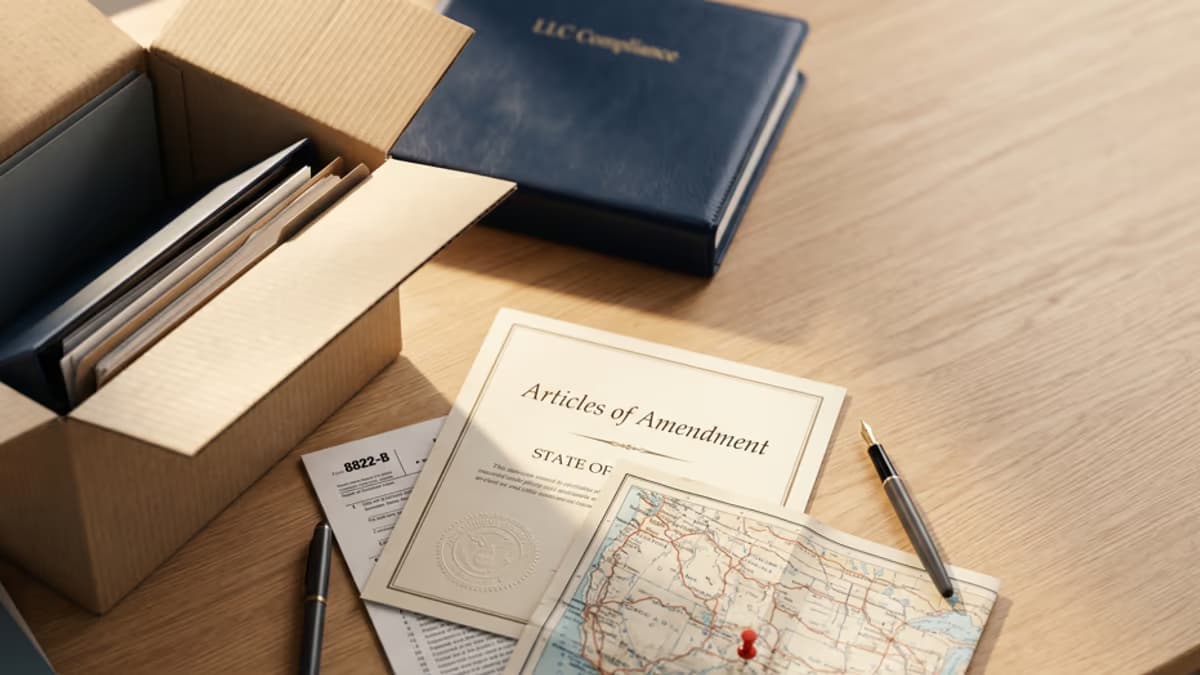
What does need to change is smaller than people expect. If you’re rebranding, you can often keep the same LLC and just file a new trade name (a DBA, “doing business as”) registered with your state or county, so you operate under a new brand without touching your underlying entity, your EIN, or your bank relationship. Your EIN, in particular, is tied to the entity, not the product. The IRS generally asks for a new number when the entity ends or a filing obligation arrives: you wind the LLC up and a corporation or a partnership takes its place, or your single-member LLC picks up employment or excise filings. Not when a solo LLC decides to teach instead of sell. Even taking on a new owner does not move the number by itself, because an entity that already has an EIN keeps it when its federal tax classification changes. If your responsible party or address changed along the way, that’s a form to file (Form 8822-B), not a new number to request.
What the IRS lists for LLCs specifically
The IRS page on when to get a new EIN keeps a separate block for each entity type, and the two entries under Get a new EIN for a limited liability company are not both structural: alongside terminating an existing LLC to form a new corporation or partnership, the page names owning a single-member LLC that has to file excise or employment taxes. That one is a filing obligation rather than a change in who owns the company, so a pivot that adds neither payroll nor an excise filing is untouched by it, while a pivot that arrives with either is not. Electing corporate treatment sits in the other list in the same block: “Change your tax election to a corporation or an S corporation” is listed under You don’t need a new EIN, next to changing your name or location.
Ready to set up your business address?
See which US cities fit — about a minute, no card needed.
If you do stand up a second entity
Where this gets real is if you do have a legitimate reason to stand up a second entity. Maybe there’s a liability reason to keep the education business separate from anything tied to the old product line, maybe a partner is coming in. In that case, it’s worth being honest about what “transferring assets” actually means: it isn’t a migration, it’s a transaction. Two separate legal persons, and one is giving something to the other. A bill of sale or contribution agreement for equipment. A brand-new EIN, because in practice the bank will ask for one whether you like it or not. A new bank account, which means new KYC, which for a lot of founders, especially ones who fought hard to get that first US bank relationship set up, is the actual pain point nobody warns you about.
The part with no clean answer
Social media accounts are the part with no clean answer at all. Instagram, Facebook, YouTube: none of them have a real “change the legal owner, keep the followers” button. Your options are usually: update the business info on the account you already have and keep the same handle and audience, or start a new account and lose the head start. There’s no paperwork that fixes that. It’s a platform decision, not a legal one.
YouTube is the partial exception, and it is worth knowing if that is where your audience lives. Its help page says that to transfer channel ownership you convert to a Brand Account, and that the person taking over must have been an owner for seven days or more before becoming primary owner. What that page does not say is what happens to the subscriber count, and a separate page about moving a channel between Brand Accounts has a table of what a transfer costs: the channel being moved loses its watch and search history, and the channel it replaces is deleted outright. What we could not find on either of those pages is a field that records the transfer between two legal entities, which is the part a lawyer would want to see.
Before you dissolve anything
So before you dissolve anything: figure out whether what you’re actually trying to fix is the entity, or just the label on it. Most pivots need a new name, not a new birth certificate.
Not legal or tax advice. Confirm with a CPA or attorney familiar with your state before dissolving or forming an entity.
Frequently Asked Questions
Sources & References
Primary sources this guide is based on.
- 1IRS · When to get a new EIN, Limited liability company (LLC) section (accessed September 20, 2026)
- 2IRS · About Form 8822-B, Change of Address or Responsible Party, Business (accessed September 20, 2026)
- 3Delaware Code Online · 6 Del. C. section 18-201, Certificate of formation (accessed September 20, 2026)
- 4California Legislative Information · California Corporations Code section 17702.01, Articles of organization (accessed September 20, 2026)
- 5Texas Legislature · Texas Business Organizations Code section 3.005, Certificate of formation (accessed September 20, 2026)
- 6Cornell Law School Legal Information Institute · 31 CFR section 1010.230, Beneficial ownership requirements for legal entity customers (accessed September 20, 2026)
- 7IRS · Single member limited liability companies (accessed September 20, 2026)
- 8YouTube Help · Change channel owners and managers with a Brand Account (accessed September 20, 2026)
- 9YouTube Help · Move your YouTube channel from one Brand Account to another (accessed September 20, 2026)
- 10Cornell Law School Legal Information Institute · 26 CFR section 301.6109-1(h), Special rules for certain entities (accessed September 20, 2026)
Not sure what you need?
Two short pages sort it out — what the products actually are, and which situation you're in.

save office
Published
I'm Henry, a hedgehog in a bow tie who explains the dull, scary parts of building and running a U.S. business.