Key takeaways
- Changing your LLC's legal name means filing articles of amendment with the state; once approved, the new name is official.
- A simple name change does not require a new EIN, but you must notify the IRS so its records match your filings, and how you notify depends on how the LLC is taxed.
- A legal name change is different from filing a DBA and from changing your address; each is its own separate filing.
Before you start
- Check name availability with your state before filing, since the new name must be distinguishable from existing entities.
- Confirm how your LLC is taxed, because that determines how you notify the IRS of the new name.
- List everyone who needs the update: banks, licenses, permits, contracts, and your DBA if you have one.
Who this is for
- LLC owners rebranding or correcting a legal name who want the change to stick across the state, the IRS, and their accounts.
- Founders unsure whether a name change requires a new EIN.
- Anyone confusing a legal name change with filing a DBA or changing an address.
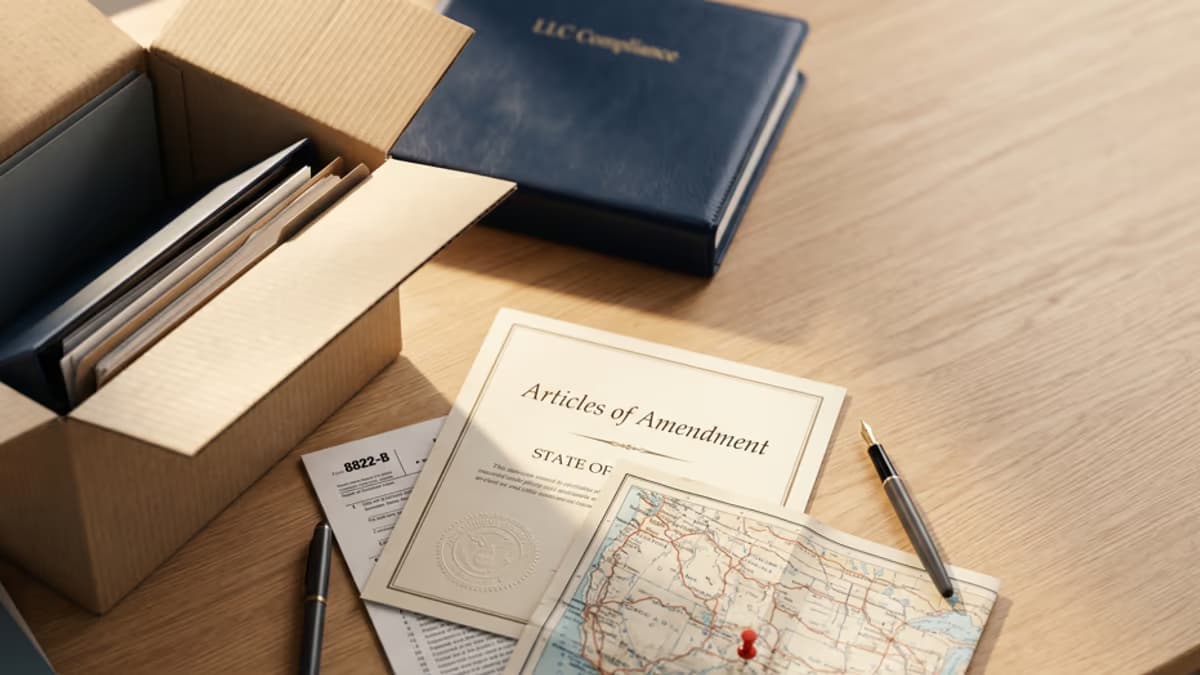
Renaming an LLC sounds simple, but the new name only becomes real once the right offices agree. You file articles of amendment with the state, then tell the IRS so its records match, and in most cases you keep the same EIN.
Setting up your LLC? See your US address options — no card →
File Articles of Amendment With the State
The legal name change happens at the state level. You file articles of amendment, sometimes called a certificate of amendment, with the same office that handles your LLC. Until it is approved, the old name is still your official one.
- Articles of amendment tell the state you are changing the LLC's legal name, and approval makes the new name official.
- The new name has to be available and distinguishable from other entities registered in the state.
- Until the amendment is approved, contracts and filings should still use the current legal name.
Approval is what makes it official
A name change is not effective just because you started using a new name. It is official when the state approves the articles of amendment, so wait for that before updating everything else.
Your EIN Stays, but the IRS Needs to Know
A common worry is whether a new name means a new EIN. For a simple name change, it usually does not. The same EIN carries over; you just have to notify the IRS so its records line up with your new state filing.
- A straightforward name change does not require a new EIN; the entity and its tax ID continue.
- You still notify the IRS of the new name, referencing your EIN, so future filings are not confused.
- How you notify depends on how the LLC is taxed, so confirm the right method for a partnership, corporation, or disregarded entity with a tax professional.
Keep the EIN paperwork consistent
Because the EIN stays the same, keep your records aligned under the new name. If you ever need to confirm the EIN later, our guide on the EIN 147C letter explains how that confirmation works.
Ready to set up your business address?
See which US cities fit — about a minute, no card needed.
Name Change vs DBA vs Address Change
These three get mixed up constantly, and they are not the same filing. Knowing which one you actually need saves time and money.
| What you want | What you file |
|---|---|
| Change the LLC's legal name | Articles of amendment with the state |
| Operate under a different brand, keep the legal name | A DBA (assumed or fictitious name) |
| Change where the LLC is located or gets mail | An address change with the state and IRS |
A legal name change, a DBA, and an address change are three separate actions with three separate filings.
If you only want to run under a different brand while keeping the legal entity name, that is a DBA, not an amendment. See our guide on DBA vs business license vs trademark for how those names differ.
Update Banks, Licenses, and Contracts
Once the state approves the amendment and the IRS is notified, the new name has to flow through everywhere the old one appeared. This cleanup is where name changes often stall.
- Update business licenses and permits, since these often have to reflect the current legal name.
- Give banks the amended documents so accounts, checks, and payment processors match the new name.
- Notify clients, vendors, and any registries, and update your DBA if the old name was tied to one.
Mismatched names cause friction
If your bank, licenses, and tax records do not all show the same name, you can hit holds and verification problems. Treat the update list as part of the name change, not an afterthought.
When a Name Change Comes With an Address or Structure Change
Sometimes a rebrand happens alongside a move or a change in how the business is run. Those are separate changes that travel together, and it helps to handle each on its own track.
- If you are also moving, the address change is its own filing with the state and the IRS, separate from the name amendment.
- If the entity structure or tax treatment is changing too, that can have different requirements, so confirm them.
- Keeping a stable business address through a rebrand means the confirmations and updated documents reach you reliably.
If the rename comes with a move, see our guide on changing your LLC business address for that separate process. You can set up a reliable mailing address through save office onboarding and check any address with our free Address Checker so nothing gets lost during the transition.
A clean LLC name change runs in order: confirm the new name is available, file articles of amendment with the state, notify the IRS while keeping the same EIN, and then push the new name through your banks, licenses, and contracts. Each step matters, because a name that is official with the state but not the IRS, or the bank, creates friction later.
Keep the legal name change separate in your mind from a DBA and from an address change, since each is its own filing. Confirm the IRS notification method for your tax setup with a professional, work through the update list, and your LLC carries its new name cleanly everywhere it matters.
Frequently Asked Questions
Not sure what you need?
Two short pages sort it out — what the products actually are, and which situation you're in.