Short answer
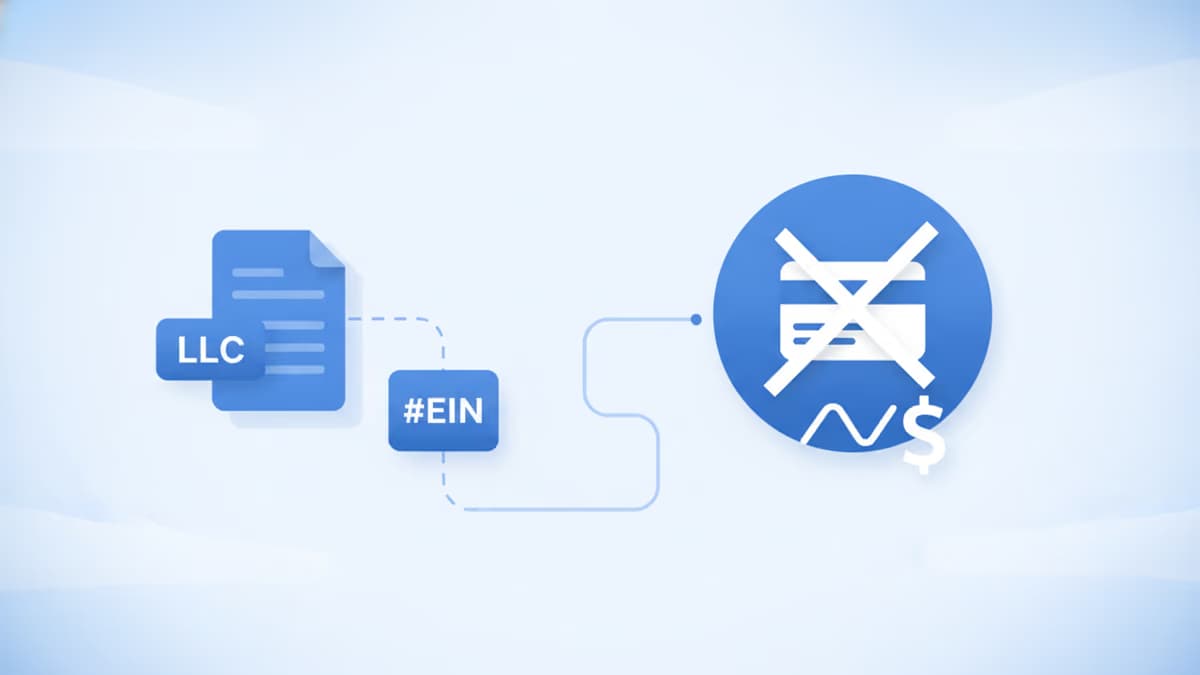
A non-resident can open a US business bank account, but keeping it open is a separate problem. Fintechs such as Mercury and Slash approve an account and can still close or freeze it later under a risk-based review of the owner's residence country, nationality, and activity. Mercury's terms let it suspend or terminate the account at its own discretion, and Slash says eligibility stays subject to ongoing residence and nationality checks. A real commercial street address removes one common rejection reason under the CIP rule, because banks want a physical business location rather than a PO box, but it does not control the closure decision. The dominant variables are who owns the company and where they live, not the address on file.
Key takeaways
- Opening a US account and keeping it open are two different problems. Fintechs can close an account at their discretion; Mercury's terms, for example, let it suspend or terminate the account at Mercury's own discretion.
- Closures are usually risk-based reviews of the owner's residence country, nationality, and activity, not a reaction to the mailing address.
- The CIP rule (Customer Identification Program, 31 CFR 1020.220) requires a physical business location. A real commercial street address removes that one rejection reason, but PO box refusal is bank practice, not a line in the regulation, and no address guarantees the account stays open.
- Keep the same real commercial address across formation, EIN, and banking. Inaccurate account information is itself a stated reason a fintech can close an account.
You can open a US business bank account as a non-resident. Keeping it open is a separate problem. A fintech can approve the account today, then close it months later under a risk review of the owner's country, nationality, and activity.
The pattern shows up constantly in founder communities: an account runs fine for a year or two, then one morning it is frozen or scheduled to close, often with no specific reason given. It reads like a glitch. It is not. It is the account agreement working exactly as written.
Did this answer your question?
Approval Is Not the Finish Line
Onboarding approval tells you the fintech was willing to open the account today. It says nothing about next year. Mercury's terms of use reserve the right to suspend or terminate an account at Mercury's discretion, and the company's own help center notes that compliance and legal constraints mean it cannot always share the specific reason for a closure. Slash, another fintech that serves international founders, states that eligibility stays subject to identity verification, sanctions screening, residence-country review, and nationality or citizenship review, and that it can update its restricted list at any time.
None of that is a loophole or a bug. It is the contract. A fintech is allowed to re-run its risk assessment after you are in, and to act on the result. That is the single most important thing a non-resident owner can understand before choosing where to bank.
Ready to set up your business address?
See which US cities fit — about a minute, no card needed.
Why Fintechs De-Risk After You Are In
US financial institutions run on a risk-based anti-money-laundering framework. The Customer Identification Program is only the front door; the ongoing duty to monitor and re-evaluate customers continues for the life of the account. When a fintech's risk model shifts, whether because of the owner's home country, a change in transaction patterns, a partner bank's policy, or a periodic re-review, accounts that no longer fit the model get closed.
Accurate information matters here in a way founders underestimate. Account agreements treat incomplete or inaccurate customer information as its own ground for closure. An address that does not match the formation documents, a home country that was not disclosed cleanly, or activity that does not match the stated business can each move an account into the review pile.
What Your Business Address Actually Does, and Does Not
The CIP rule, 31 CFR 1020.220, is specific. For a legal-entity customer, the bank must collect a principal place of business, local office, or other physical location. The word that matters is physical. A PO box does not satisfy it. Notice what the rule does not say: it never uses the phrase 'PO box prohibited.' Banks refuse PO boxes as a matter of practice and interpretation, not because the regulation lists them. That distinction matters when you read confident claims online about what is or is not allowed.
So a real commercial street address does one concrete thing: it removes the physical-location rejection reason. It does not make you lower-risk in the eyes of a de-risking review, and it does not override the owner's country or nationality in the risk model. A registered agent address is a separate slot entirely. It exists to receive legal service for the state and is not a business banking address; using it as one tends to create mismatches rather than solve them.
The honest limit
No address, virtual or physical, guarantees an account stays open. A real commercial street address removes one common rejection reason at opening. The decision to close later is driven by the owner's residence country, nationality, and activity, which an address cannot change. Anyone selling an address as closure insurance is overselling it.
Traditional Banks Versus Fintechs for Non-Residents
The trade-off runs in both directions. Traditional banks are harder to open but slower to close on a whim; fintechs are easy to open and quicker to re-review. As of July 2026, based on each provider's own published pages, which can change:
| Provider | Non-resident access | Watch for |
|---|---|---|
| Bank of America (traditional) | Possible, but generally requires an in-person visit with a specialist; no remote non-resident opening | Documentation is verified in person; third-party checklists online are not the bank's official list |
| Mercury (fintech) | Supports US-registered companies owned by founders living abroad | Does not publish its full list of unsupported regions; a re-review can close accounts |
| Relay (fintech) | Generally requires an SSN or ITIN | A pure non-resident with no ITIN faces a practical barrier; confirm before relying on it |
| Wise Business | Opens with an EIN and passport, no SSN or ITIN | Wise is a licensed money-services business, not a bank; balances are not FDIC-insured deposits |
Non-resident access by provider (as of July 2026, per each provider's public pages, subject to change).
Lowering Closure Risk Without Pretending to Eliminate It
You cannot make a fintech promise to keep your account. You can remove the avoidable triggers. Use one real commercial street address consistently across the formation filing, the EIN application, and the bank application, so nothing looks mismatched. Keep the business activity you describe matching the money that actually moves. Disclose ownership and residence cleanly at onboarding rather than letting a later review surface it as a surprise.
Many non-resident founders also keep a second account at a different provider, precisely because a single fintech closure should not be able to freeze the whole business. That is redundancy, not paranoia. The goal is not a guarantee. It is fewer reasons for a review to land on your account, and a fallback if one does.
Where save office Fits
save office provides real US commercial street addresses in cities including New York (SoHo and NoMad), San Francisco, Wilmington Delaware, Tampa, Washington DC, and Cheyenne Wyoming. Each is a physical, USPS-classified commercial location with a license agreement naming the LLC, which is what the CIP rule's physical-location requirement is asking for. That removes the PO-box and no-physical-location rejection reason at opening.
What it does not do is decide whether a fintech keeps your account. The free address checker runs a USPS deliverability and classification check before you file, so you can see how an address is classified in advance. It is a diagnostic, not a guarantee of approval or of staying open, and save office does not file your taxes, act as your registered agent, or promise any bank outcome. The address is one clean input into a decision that ultimately turns on who owns the company and where they live.
Frequently Asked Questions
Not sure what you need?
Two short pages sort it out — what the products actually are, and which situation you're in.
Watch this in 60 seconds
Henry covers the same ground on video.


save office
Published
I'm Henry, a hedgehog in a bow tie who explains the dull, scary parts of building and running a U.S. business.