Key takeaways
- Most states reject a P.O. box for the LLC's principal office address, and a virtual office with a real street address fills that slot. The registered agent address is a separate slot with stricter rules that vary by state, so do not assume one address covers both.
- P.O. box fees vary widely by post office location and box size; virtual offices run around $50-$200 per month and add scanning, forwarding, and a commercial street address.
- Banks treat P.O. boxes as a red flag during identity checks; a real street address moves applications through cleanly.
Who this is for
- Founders comparing P.O. boxes and virtual offices for a new LLC.
- Operators currently on a P.O. box who hit LLC registration or bank account rejection.
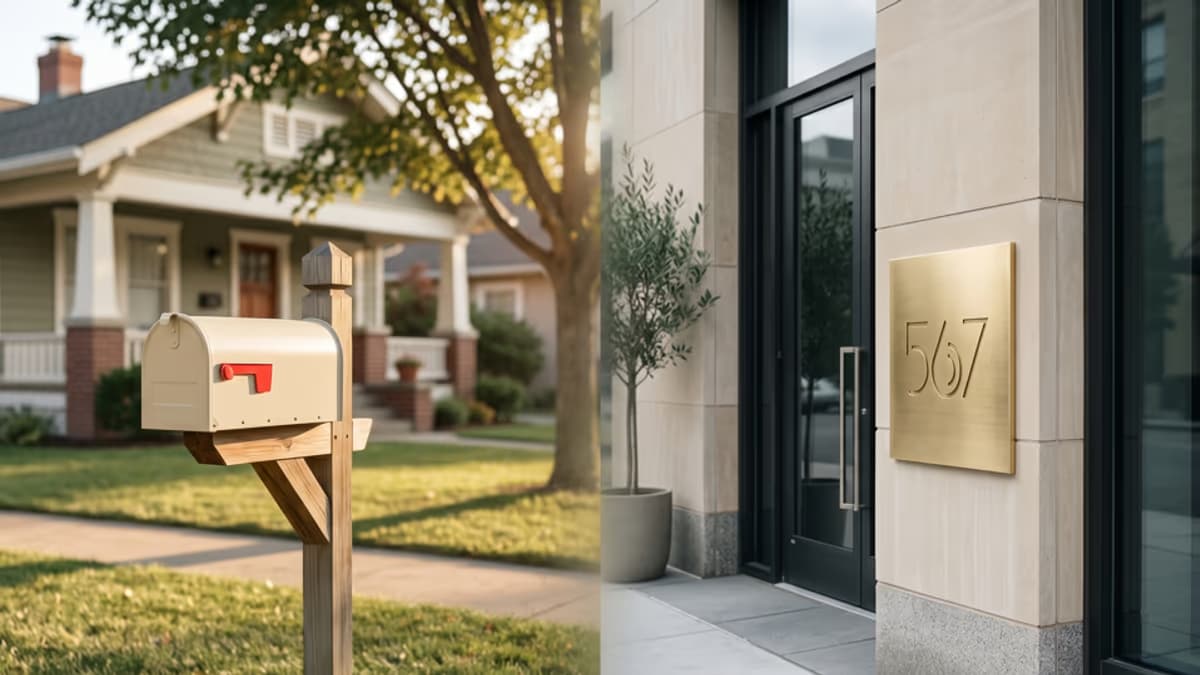
A PO Box gives you a mailing address at your local post office for roughly $5-$100+ per month, depending on size and location. A virtual office, on the other hand, gives you a real commercial street address, mail scanning, a business phone number, and on-demand meeting rooms for $50-$200 per month. The right choice depends on whether you need a simple mailbox or a full business identity. If you plan to register an LLC, open a business bank account, or meet clients, a virtual office is generally the better fit.
Setting up your LLC? See your US address options — no card →
What exactly is a PO Box?
A PO Box is a locked mailbox inside a United States Post Office. You rent it from USPS on a 3, 6, or 12-month basis. Pricing varies by location and box size. For reference, a small box in a low-fee rural post office can start around $5-$10 per month, while a large box in a major city can run $1,000 or more per year. You receive a mailing address formatted as 'PO Box 1234, City, State ZIP.'
P.O. boxes accept letters, packages from USPS, and in some locations packages from UPS and FedEx through a program called Street Addressing. You pick up your mail in person during post office hours. There is no mail scanning, no forwarding to email, and no receptionist. It is a physical mailbox, nothing more.
What does a virtual office include?
A virtual office provides a real street address in a commercial building. Most providers receive mail on-site, then scan the exterior of each item and notify you by email, with full-content scans available on request. Physical mail can be forwarded to any address you choose. Many providers offer add-ons such as a dedicated business phone number, live receptionist service, and access to meeting rooms or day offices on an hourly or daily basis.
The key difference is that a virtual office address looks and behaves like a real office. It works as a standard street address, usable on business cards and in government filings, and listed in mapping services where the location supports it. Clients, banks, and agencies see a professional commercial address rather than a PO Box number that some banks read as a signal the business has no fixed location.
Ready to set up your business address?
See which US cities fit — about a minute, no card needed.
Side-by-side comparison: virtual office vs PO Box
The two options overlap on one job, receiving mail, and differ on everything else. The table below lines up the factors that decide most setups: cost, whether the address is accepted for an LLC and a bank account, how mail reaches you, and what the address signals to a client.
| Factor | PO Box | Virtual office |
|---|---|---|
| Cost | USPS fees vary by post office location and box size, billed per 3, 6, or 12 months | Around $50-$200 per month depending on city and services |
| LLC principal address | Rejected by most state Secretaries of State | Accepted, a real commercial street address |
| Registered agent | Not accepted | Offered by many providers as a separate add-on |
| Business bank account | Often flagged or rejected during identity review | Passes as a standard commercial street address |
| Mail handling | In-person pickup during post office hours | Scanned and emailed, physical forwarding on request |
| Package carriers | USPS, plus UPS and FedEx where Street Addressing is enabled | USPS, UPS, FedEx, and DHL received on-site |
| Meeting space | None | Conference rooms and day offices booked by the hour |
| Professional image | Reads as a mailbox or a home-based setup | A commercial address in a recognized business district |
Virtual office vs PO Box across the factors that decide a business address
Cost is the only line where the PO Box wins, and the gap narrows once you account for what a virtual office bundles in: a business phone line, mail scanning, and meeting space that would otherwise be three separate bills. Every other line is a function the PO Box cannot perform at all. The registered agent line is the one that catches new LLC owners: a registered agent has to be a person or entity available during business hours to accept service of process, and a PO Box cannot fill that role.
PO Box, CMRA mailbox, and commercial address: what USPS actually records
Between a PO Box and a virtual office sits the thing that confuses most founders: the CMRA flag. A Commercial Mail Receiving Agency (CMRA) is any business that receives mail on behalf of someone else, which USPS requires it to register as, using PS Form 1583. That covers the pack-and-ship shop renting private mailboxes, and it also covers an office building that accepts mail for its tenants, so the flag by itself does not tell you which one you are looking at. The address looks like a normal suite, for example '123 Main Street, Suite 200,' so on paper it can be hard to tell apart from a real office.
The difference shows up in the USPS database, but not in the way most guides describe it. Every delivery point carries a classification, and banks, state licensing systems, and city licensing offices read it automatically. A PO Box signals a mail-only location and so does a mailbox counter at a retail store. A commercial office building with on-site mail handling reads as a standard business address. This is the layer that decides whether an application clears or lands in a manual review queue.
| USPS classification | What it is | How banks and agencies treat it |
|---|---|---|
| PO Box | A locked box inside a US Post Office | Rejected for an LLC principal address, flagged in bank identity review |
| CMRA flag, retail mailbox | A private mailbox at a mail store, opened with PS Form 1583. The location is mail-only | Mixed, some banks and cities reject it, some accept it with conditions |
| CMRA flag, commercial building | A virtual office inside a working office building that also receives mail for clients, so USPS records both the flag and a commercial classification | Usually clears when the address matches the state filing, though the flag can route the application to manual review |
| Residential | A home address in a residentially zoned parcel | Accepted for some filings, but it exposes the home address and can fail commercial-use checks |
| Commercial, no CMRA flag | An office address in a commercial building, not registered as a mail-receiving agent | Accepted as a standard business street address |
How USPS classifies each address type and how banks and agencies treat it
CMRA is a flag, not a category
The CMRA flag and the commercial classification are separate fields in USPS data, so an address can carry both. That is why 'is it a CMRA?' is the wrong first question. The right one is what the flag is sitting on: a mail counter, or a real office building. save office addresses are all classified commercial, and most carry no CMRA flag at all, which you can confirm yourself in the address checker.
Two addresses can look identical on paper
A CMRA suite and a commercial office suite can carry the same 'Suite 200' format. The classification is invisible on the envelope but visible to every bank and licensing system that queries the USPS database. Checking the classification, rather than reading the address, is the only reliable test.
You can see how USPS classifies any US address before committing to it. The save office address checker runs the same USPS Delivery Point Validation and commercial mail receiving check that banks and licensing offices use, and the guide to checking whether an address is a CMRA walks through how to read the result.
When is a PO Box enough?
A P.O. box works well if you need a simple mailing address to keep your home address off public records and you do not plan to use it for business registration. Side hustlers, hobbyist sellers, and individuals who want mail privacy without business features can save money with a basic P.O. box.
If you run a small local business with no remote clients, rarely receive important mail, and already have a place to meet people, then this may cover all your needs. The key question is whether anyone, such as a client, a bank, or a government agency, will ever look at your address and judge your business by it. If the answer is no, then a P.O. box is fine.
When you need a virtual office instead
Choose a virtual office if you are registering an LLC or corporation and need a physical street address for your registered agent. Choose it if you are opening a business bank account since many banks flag or reject applications with P.O. box addresses. Choose it if clients visit your website and see your address, or if you occasionally need a professional space for meetings.
Remote businesses, freelancers billing corporate clients, e-commerce sellers who want returns sent to a commercial address, and consultants who need to project credibility all benefit from the upgrade. The cost difference between a P.O. box and a basic virtual office plan is often less than $100 per month, a small price for the legal compliance, mail convenience, and professional image it provides.
Setting up a virtual office address with save office
save office operates real commercial office addresses in US cities including New York, Washington DC, San Francisco, Tampa, Wilmington Delaware, and Cheyenne Wyoming. Every one of them carries the USPS commercial classification, because each is a working office building rather than a mail counter, and most carry no CMRA flag at all. Run any of them through the address checker and read the classification for yourself.
Mail is scanned and emailed, and packages from USPS, UPS, FedEx, and DHL are received on-site. A new address is typically ready within 24 hours, which matters when an LLC filing or a bank application is waiting on it. Before committing to a city, run the address through the address checker, and if a business license is part of the plan, the business license rules guide covers which cities accept a virtual address at the local layer.
Frequently Asked Questions
Not sure what you need?
Two short pages sort it out — what the products actually are, and which situation you're in.
Watch this in 60 seconds
Henry covers the same ground on video.