Key takeaways
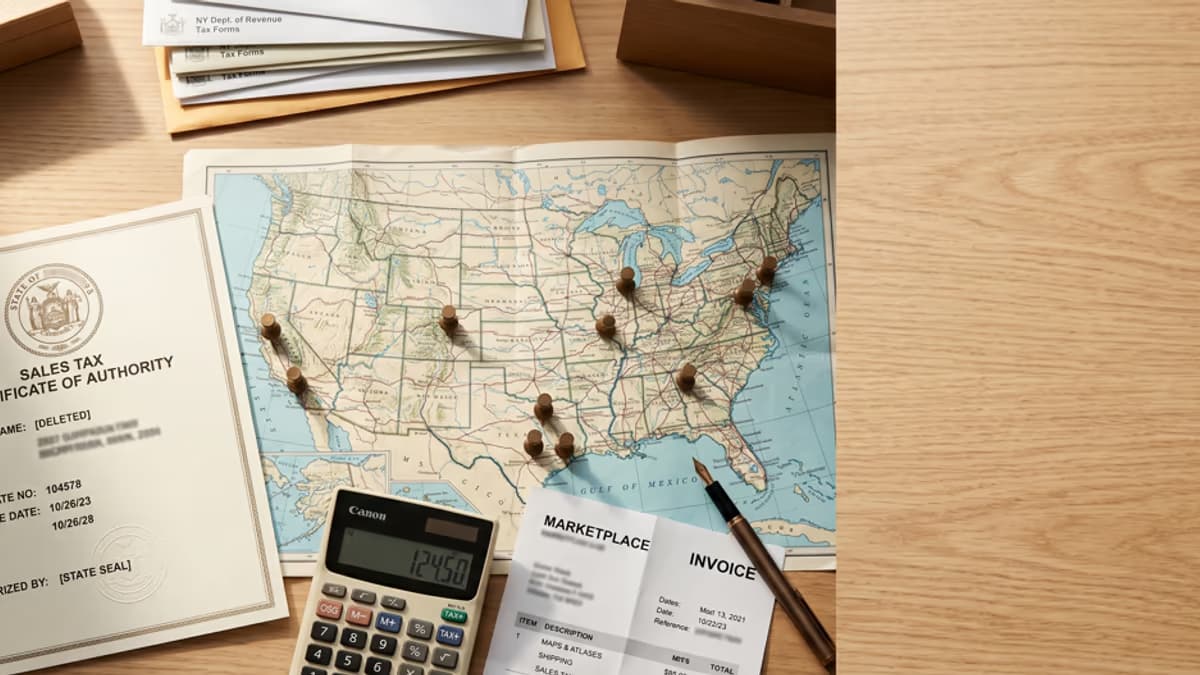
- State business licenses usually accept a virtual address; city-level licenses often block it because of zoning rules tied to the physical address.
- A virtual office in a commercial zone typically passes; addresses in mixed-use or residential zones often fail at the city level.
- Save the email confirmation and license number; renewals can flag address mismatches the city office didn't receive earlier.
Before you start
- Check both your state and city license requirements; the state often passes but the city blocks.
- Confirm the virtual office building's commercial zoning before filing the city license application.
Who this is for
- LLC owners applying for state and city business licenses.
- Operators whose city license got denied or revoked over an address issue.
A virtual address generally passes state-level business license requirements when the address is a real physical commercial location with on-site mail handling, but city and county licensing offices often apply stricter tests that can reject the same address. This split is the key point to understand before paying for a virtual office that the local licensing office may then refuse.
State licensing systems typically validate the address through Secretary of State records or a tax registration database. They usually accept any commercial street address that does not classify as a PO Box, a Commercial Mail Receiving Agency (CMRA) mailbox, or a residence with no commercial zoning. City and county systems run separate checks that include walk-in capability, zoning class for the parcel, signage requirements, and in some industries an in-person inspection.
This guide covers the state-vs-local split that decides which addresses pass and which do not, what changes when the virtual address sits in a different state from the LLC, the city-by-city policy comparison for save office locations, the four industry categories that face the toughest local scrutiny, the CMRA and PO Box check that many local licensing systems run automatically, and the verification steps every founder should take before committing to a city.
Setting up your LLC? See your US address options — no card →
The state-vs-local split: where virtual addresses pass and where they break
Most US licensing systems split into two layers. The state layer registers the LLC and issues any state-level professional or industry license. The local layer issues the city or county business license, sometimes called a business tax receipt, business privilege license, or basic business license depending on the jurisdiction.
State licensing systems are largely paper-based and use Secretary of State records as the source of truth. The principal business address on the formation documents is the address the state checks, and a virtual office in that state generally passes as long as the address is a real commercial street address. Local licensing systems, by contrast, often involve a zoning verification step and a walk-in or signage requirement that virtual offices have to satisfy through their service agreement.
| Layer | What it checks | Virtual address pass rate |
|---|---|---|
| State LLC formation | Real commercial street address, no PO Box, no CMRA-only mailbox | High, virtual office with mail handling almost always passes |
| State professional license (CPA, attorney, contractor, real estate) | Sometimes a separate street address tied to the licensee, with state-specific rules | Mixed, depends on the profession and state board |
| City or county business license | Zoning class for the parcel, walk-in capability, sometimes inspection | Mixed, depends on city policy and industry category |
| City home occupation permit | Address has to match the residence of the licensee, business activity restricted | Not applicable, virtual addresses are not residences |
State vs local licensing layers and how each treats virtual addresses
Why the state often passes but the city blocks
State systems treat the address as a recordkeeping field. City systems treat it as a zoning question: is the parcel where the business is registered actually zoned for the activity the LLC will conduct? A virtual office is zoned for general commercial use, which covers most professional services and online businesses, but does not cover food preparation, manufacturing, retail with walk-in customers, or activities that generate noise, traffic, or hazardous materials.
When the virtual address is in a different state from your LLC
Founders often ask what licensing changes when the virtual address sits in a different state from where the LLC is registered. In short, the address state and the formation state are two separate questions. A virtual address in a state where the LLC does no actual business generally functions as a mailing and recordkeeping address, and it does not by itself create a business license obligation in that state. Business license obligations follow the state where the business actually operates, and state tax registration can follow a separate nexus test, so treat sales and income tax as their own questions.
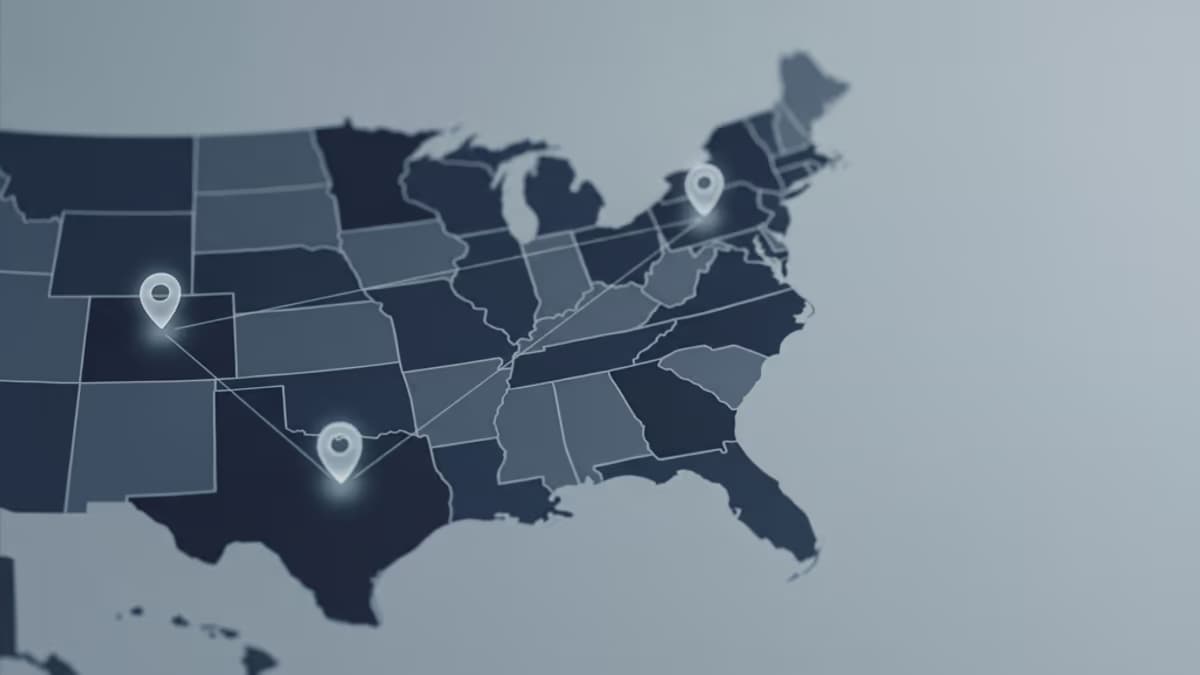
Three different states can be in play at the same time, and keeping them separate is what prevents both an unnecessary license filing and a missed one.
| Role | What it is | What it drives |
|---|---|---|
| Formation state | The state where the LLC is registered with the Secretary of State | The annual report, the registered agent requirement, and the state filing fees |
| Operating state | The state where the work actually happens, including employees, inventory, and regular in-person clients | Foreign qualification, state and city business licenses, and tax registration |
| Virtual address state | The state where the mailing and principal-record address is located | Mail delivery and the address listed on filings, but not a license on its own |
Three address roles that can sit in different states, and what each one drives
The license follows the work, not the mailbox
A Wyoming LLC with a virtual address in Wyoming and all of its work done in Texas owes its business license and registration attention to Texas, the operating state, not to Wyoming. Some states, Texas among them, have no single statewide business license, so the obligations land at the city and industry level instead. The virtual address state only creates a license question when the business actually conducts activity there, for example staff working from that address.
Two related decisions often travel with this one. Filing a 'doing business as' (DBA) name when the operating state differs from the formation state is covered in the DBA different-state address guide, and registering the LLC to do business in a second state is covered in the foreign qualification guide.
Ready to set up your business address?
See which US cities fit — about a minute, no card needed.
City-by-city policy comparison for save office locations
The cities where save office operates have different business license regimes. The table below summarizes the local license name, whether a virtual address typically passes, and the most common gotcha for each. Pricing details and full rules live on the city pages linked at the end of each row.
| City | Local license name | Virtual address typically accepted | Most common gotcha |
|---|---|---|---|
| New York, NY | No general license applies to most businesses; licensing is industry-specific | Yes for most businesses, so the question usually arises only for industry-specific permits | Confirm your category with the city, since some industries such as food service and childcare require physical inspection |
| Wilmington, DE | Delaware state business license + city license | Yes, broadly accepted | The state license attaches to conducting a trade or business in Delaware; a DE-formed LLC with no DE office or staff typically has no DE license obligation, and the Division of Revenue points borderline cases to its Nexus Questionnaire |
| San Francisco, CA | Business Registration Certificate | Yes for service businesses | Fee is based on SF gross receipts, or payroll expense for administrative offices; register within 30 days of starting business in the City |
| Cheyenne, WY | No general license applies to most businesses; licensing is industry-specific | Yes, low barrier | Lower barrier than most cities, but confirm your category with the Cheyenne City Clerk, since certain industries still need a city license |
| Tampa, FL | Business Tax Receipt (BTR) | Yes for office-based businesses | Florida authorizes a county levy and a municipal levy separately, so a city receipt and a county receipt are usually both required |
| Washington, DC | Basic Business License (BBL) | Yes for most categories | Clean Hands blocks issuance if more than $1,000 in taxes, fees, fines, or penalties is owed to OTR or DOES, or if any required District return is unfiled |
City-level business license rules across save office's cities. Always confirm with the local licensing office, since policies update without notice.
The full city pages with current pricing, activation details, and the principal business address record for each location are at save office locations. Each page links to the local licensing office and the documentation typically required when a virtual address is listed on the application.
Four industry categories that face the toughest local scrutiny
Some business categories trigger automatic local review, even when the state and city would normally accept a virtual address for a generic LLC. These categories almost always need a real lease, a zoning verification letter, or a separate license from a state board.
- 1Food service, food preparation, and food sales. Restaurants, caterers, food trucks, packaged food sellers, and home bakery operators all require a health department permit and an inspection at the actual food preparation site. A virtual address can be the LLC's principal business address but cannot be the food preparation address.
- 2Retail with walk-in customers. Brick-and-mortar retail, repair shops, and salons require a zoning class that allows public walk-in traffic. Virtual office zoning typically does not cover this. Use a virtual address for the holding LLC and a separate real lease for the storefront.
- 3Childcare, healthcare, and any licensed care service. State boards require an inspected facility with documented safety standards. The license attaches to the physical facility, not to the LLC.
- 4Construction, contractors, and trades. State contractor boards usually require a primary business location that matches the contractor's bond and insurance documents. Some states accept virtual addresses for the office portion; many require the address to match the licensee's home or a real shop.
For all other categories, including consulting, marketing, software, ecommerce drop-shipping, freelance services, online education, and most professional services, a virtual address with mail handling is almost always accepted at both the state and city level.
What the automated address check actually reads
Many local licensing offices run an automated check against the USPS database to see how the listed address is classified. The classifications are not equivalent. A PO Box is not a street address at all and fails most city layers outright. A CMRA record is a registration, which says the operator is registered to receive mail for others, and it more often routes an application to a documentation request than to a rejection.
- PO Box addresses fail almost universally at the city license layer. State LLC formation usually does not accept PO Boxes either, but it is the local layer that has the most aggressive automated rejection.
- CMRA-registered addresses trigger different responses by city. CMRA is a USPS registration that covers any operator receiving mail for others, including coworking spaces and office business centers, not only retail mail stores. Some cities accept these addresses with a service agreement showing 24-hour mail access. Others run a walk-in or zoning check that a mail-only counter does not satisfy.
- Private mailbox suites at coworking spaces that have not registered as CMRA fall in a gray zone. Some pass, some fail, and the same address can pass in one city and fail in another.
- Virtual offices with on-site receptionists and mail handling are USPS commercial-classified street addresses, and that classification is a different axis from the CMRA flag. Being a staffed office building is not a reason the CMRA flag is absent: USPS treats office business centers as CMRAs for postal purposes, so check both axes rather than inferring one from the other.
Founders who want to verify the classification of any US address before applying can use the save office address checker to see how USPS classifies the address (CMRA, PO Box, residential, or commercial), which is the same data the city licensing office runs against.
Verification steps before committing to a city
- 1Pull the city's licensing office page for the specific business category. Look for the words 'physical address required,' 'commercial zoning,' 'walk-in inspection,' or 'home occupation permit.' These phrases signal stricter local rules.
- 2Email the city licensing office with a one-line question: 'Does your office accept a virtual office street address (with on-site receptionist and mail handling) for a [business category] license application?' Response times vary by city; many offices reply within 1-2 weeks. Save the email for the application file.
- 3Run the address through the [save office address checker](/tools/address-checker) to confirm the USPS classification before paying for the address. Commercial classification almost always passes; CMRA classification needs city-specific confirmation; PO Box and residential classifications fail at the city layer in most cities.
- 4Check the zoning code for the parcel through the city or county zoning portal. Zoning codes that include 'C-1,' 'C-2,' 'O' (office), or 'M' (mixed-use) almost always cover virtual office activity. Residential zoning codes ('R-1,' 'R-2') do not.
- 5Confirm with the virtual office provider that the service agreement names the LLC as a tenant or licensee at the address, and that the document can be submitted with the city license application as proof of right-to-occupy.
Save the email confirmation for audit
Cities sometimes change policy without updating the public-facing licensing page. An email confirmation from the licensing office, dated and signed, is the strongest defense if a future inspection questions the address. Keep the email in the LLC's compliance folder alongside the Articles of Organization and the EIN letter.
Address consistency across state and city filings
When the LLC's principal business address differs between the state Secretary of State record and the city license application, the city often flags the application for additional review. The reverse is also true: a city license issued to one address while the Secretary of State record points to a different address triggers eventual reconciliation requests from one or both offices.
- State Secretary of State principal business address on the most recent annual report or initial Articles of Organization.
- IRS Form 8822-B principal business address, filed promptly after an address change. The strict 60-day deadline applies to a change of responsible party, not to an address-only update.
- FinCEN Beneficial Ownership Information (BOI) report principal place of business with a 30-day update window after any change. Under FinCEN's August 2026 final rule, BOI reporting applies only to foreign reporting companies, so US-formed LLCs are exempt.
- City business license application address.
- County business tax receipt address (where the county is separate from the city).
- State professional license address (where applicable, may differ from LLC principal address by design).
The companion guides cover the address consistency requirements at each system: the free virtual address fail guide covers the four-quadrant test that determines whether an address survives bank and IRS verification, and the CMRA check guide covers the USPS classification that licensing algorithms read in the background.
When a save office address fits the local license requirement
A real US business address from save office, with locations in New York, Washington DC, San Francisco, Tampa, Wilmington Delaware, and Cheyenne Wyoming, is a commercial office building with on-site receptionist and mail handling, and it carries a USPS commercial classification. Two things worth stating plainly rather than leaving to inference. First, no provider can promise a licensing outcome, so treat the city rows above as where to ask, not as approvals. Second, the CMRA flag is a separate axis from commercial classification, and two of our addresses, San Francisco and Washington DC, are CMRA-registered. Industry-specific licenses (food, healthcare, contractors) still require their own facility documentation, which save office cannot substitute.
The address is consistent with the principal business address on Articles of Organization, IRS Form 8822-B, business bank account verification, payment processor address, and Google Business Profile listing. FinCEN BOI reporting applies only to foreign-formed reporting companies under FinCEN's August 2026 final rule, so US-formed LLCs no longer need to keep BOI in this chain. Same address across all systems means fewer verification holds, fewer identity reviews, and fewer reconciliation requests when filings come up for renewal.
Frequently Asked Questions
Sources & References
Primary sources this guide is based on.
- 1USPS · DMM 508.1.8.1, CMRA definition and office business centers (accessed August 8, 2026)
- 2San Francisco Office of the Treasurer and Tax Collector · Register a Business, San Francisco registration fee basis and deadline (accessed August 8, 2026)
- 3District of Columbia Office of Tax and Revenue · Certificate of Clean Hands, license denial threshold (accessed August 8, 2026)
- 4Delaware Division of Revenue · Business Licenses FAQs, who must obtain a Delaware license (accessed August 8, 2026)
- 5The Florida Senate · Fla. Stat. Chapter 205, county and municipal business taxes (accessed August 8, 2026)
- 6IRS · About Form 8822-B, address and responsible party changes (accessed August 8, 2026)
Not sure what you need?
Two short pages sort it out — what the products actually are, and which situation you're in.